7 to 14 Days to Surface Healing: CO2 Laser Recovery From an NP

Most people are surface-healed within 7 to 14 days of a CO2 laser treatment, though visible pinkness can linger for weeks afterward. The first 48 to 72 hours bring the worst of it: swelling, redness, and clear drainage. The single rule that matters most in that window is keeping the skin moist under a clinician-recommended ointment, staying out of the sun entirely, and sticking to the cleansing schedule your provider gives you.
TL;DR:
The first 48 to 72 hours are the most critical, requiring strict moisture maintenance, sun avoidance, and careful cleansing to reduce swelling and oozing.
Skin typically closes between days 7 to 14, but collagen remodeling and texture improvements continue for several months after healing appears complete.
Avoid hot tubs, sweating, active skincare, makeup, and sun exposure during the first two weeks to prevent complications and delays in healing.
Signs of infection or complications include persistent swelling, warmth, yellow drainage, bleeding, or uncontrolled pain, requiring immediate medical contact.
Supporting long-term results depends on consistent ointment use, daily broad-spectrum SPF, a healthy diet, hydration, and quitting smoking to promote skin regeneration and prevent hyperpigmentation.
Table of Contents
What does a CO2 laser recovery timeline look like day by day?
Recovery unfolds in fairly predictable stages, though everyone heals at a slightly different pace depending on how aggressive the treatment was and how well the aftercare routine gets followed.
Hours 0 to 24: Before you leave the clinic, your provider applies an occlusive ointment and possibly a dressing. Your skin will feel sunburned, tight, and hot. Cold compresses help control the swelling that starts almost immediately.
Days 1 to 3: This is peak territory. Swelling and oozing are typically heaviest in the first 48 to 72 hours, and many clinics have patients begin dilute vinegar or saline soaks during this stretch to keep the surface clean without scrubbing it. Dressings get changed and ointment reapplied several times a day.
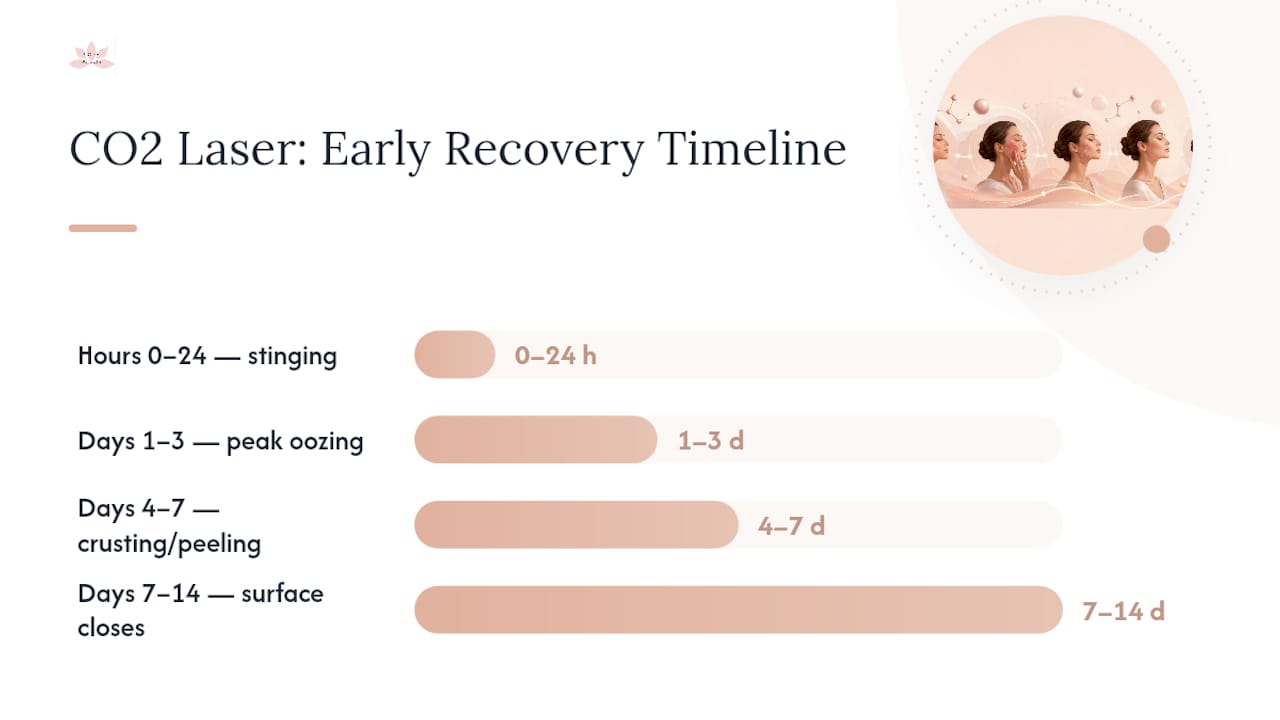
Days 4 to 7: Oozing slows, and crusting and light peeling take over. Skin surfaces commonly close by day 7 to 14, and a lot of people feel presentable enough for low-key outings by day 7 to 10, even though redness is still obvious under makeup-free skin.
Weeks 2 to 4: Redness fades from bright pink to a softer flush. Once the skin has fully closed, most clinicians clear patients to ease back into light exercise and mineral makeup.
Months beyond: The visible part of co2 laser recovery wraps up fast compared to what is happening underneath. Collagen remodelling continues for months, which is why texture and tone keep improving long after the skin looks “normal” again.
Hours 0 to 24: ointment, cold compresses, sunburn-like sting
Days 1 to 3: peak swelling, oozing, soaks begin
Days 4 to 7: crusting, peeling, presentable but still pink
Weeks 2 to 4: fading redness, cleared for exercise and mineral makeup
Months 2 to 6: gradual collagen remodelling and texture gains
How do I take care of my skin during the first week?
The first seven days are where co2 laser aftercare either works in your favour or sets you up for a rougher healing stage. Your clinician will send you home with a specific ointment and instructions on dressing changes, but the general routine looks like this:
Keep the treated skin moist at all times. A thin, consistent layer of ointment, such as Aquaphor or plain petroleum jelly, prevents the crust from hardening and cracking.
Cleanse with a dilute vinegar or saline soak, following your clinician’s exact ratio, then pat dry gently rather than rubbing.
Reapply ointment right after each cleanse. Thin layers work better than thick ones because a heavy coat traps heat and can clog pores, sometimes triggering small temporary bumps.
Use distilled water instead of tap or well water for cleansing during the first several days if there’s any doubt about local water quality.
Manage pain with acetaminophen as your first choice. NSAIDs like ibuprofen are sometimes discouraged because of their effect on inflammation and bleeding risk, so confirm with your provider before taking any.
If you have a history of cold sores, ask about antiviral prophylaxis before treatment day. Clinics commonly prescribe antivirals for anyone with facial herpes history, since the laser can trigger an outbreak.
Pro Tip: Keep your ointment tube in the fridge for the first two days. The cool application feels genuinely soothing against hot, swollen skin, and you’ll find yourself more consistent about reapplying it on schedule.
What should you avoid during CO2 laser downtime?
A few missteps account for most of the complications people run into during fractional CO2 downtime, and nearly all of them are avoidable.
No hot tubs, saunas, or swimming for at least one to two weeks. Standing water and heat both raise infection risk on open skin.
Avoid activities that cause heavy sweating. Sweat trapped under a healing surface can macerate the skin and delay closure.
Skip active skincare, including retinoids, AHAs, BHAs, and vitamin C, until your clinician gives the go-ahead.
No exfoliating, scrubbing, or picking at crusts, even when they itch.
Hold off on makeup and shaving until the skin has fully re-epithelialized.
Stay out of direct sun. Once the skin has closed, broad-spectrum SPF 30 to 50 plus a physical barrier like a wide-brim hat becomes non-negotiable for months.
Avoid smoking and vaping. Both restrict blood flow to the skin, and impaired circulation means slower healing.
When should you contact your clinic about a complication?
Most healing follows the expected script, but certain signs mean you should call your provider the same day rather than waiting it out.
Fever, or a temperature climbing toward 101°F (38.3°C)
Increasing heat, redness, or swelling well past day 3, instead of the usual gradual improvement
Green or yellow drainage, or a foul odour, both signs of possible infection
Bleeding that won’t stop, or blistering beyond what you were told to expect
Pain that isn’t controlled by the medication your provider recommended
Take a clear photo in good lighting and note exactly when the symptom started before you call. Anyone who is immunosuppressed, recently used isotretinoin, or has poorly controlled diabetes carries a higher baseline risk and should mention that history at the first sign of trouble, not after it worsens.
How can you support healing and protect your results long term?
Two habits do more for your outcome than anything else: keeping the wound moist and staying out of the sun. Sun exposure on healing skin is the biggest driver of post-inflammatory hyperpigmentation, and it’s largely preventable.
Reapply ointment consistently rather than letting crusts dry out and crack.
Wear SPF daily once the skin closes, and keep wearing it for months, not weeks.
Eat enough protein, stay hydrated, and sleep well. All three support tissue repair.
If you smoke, this is a strong reason to quit, at least temporarily. It measurably slows wound healing.
Talk to your clinician before adding any supplement marketed for skin healing.
Pro Tip: If you notice lingering discolouration weeks after your skin has closed, don’t assume it’s permanent. Discuss timing with your clinician before jumping into a second treatment. A dedicated resource on fading dark spots can also help you understand what’s realistic while you wait it out.
Surface healing can trick people into thinking they’re done. The skin looking closed by day 10 doesn’t mean the remodelling underneath has caught up, and rushing back to retinoids or a second pass too soon can undo progress rather than speed it up.
Who’s guiding this recovery advice?
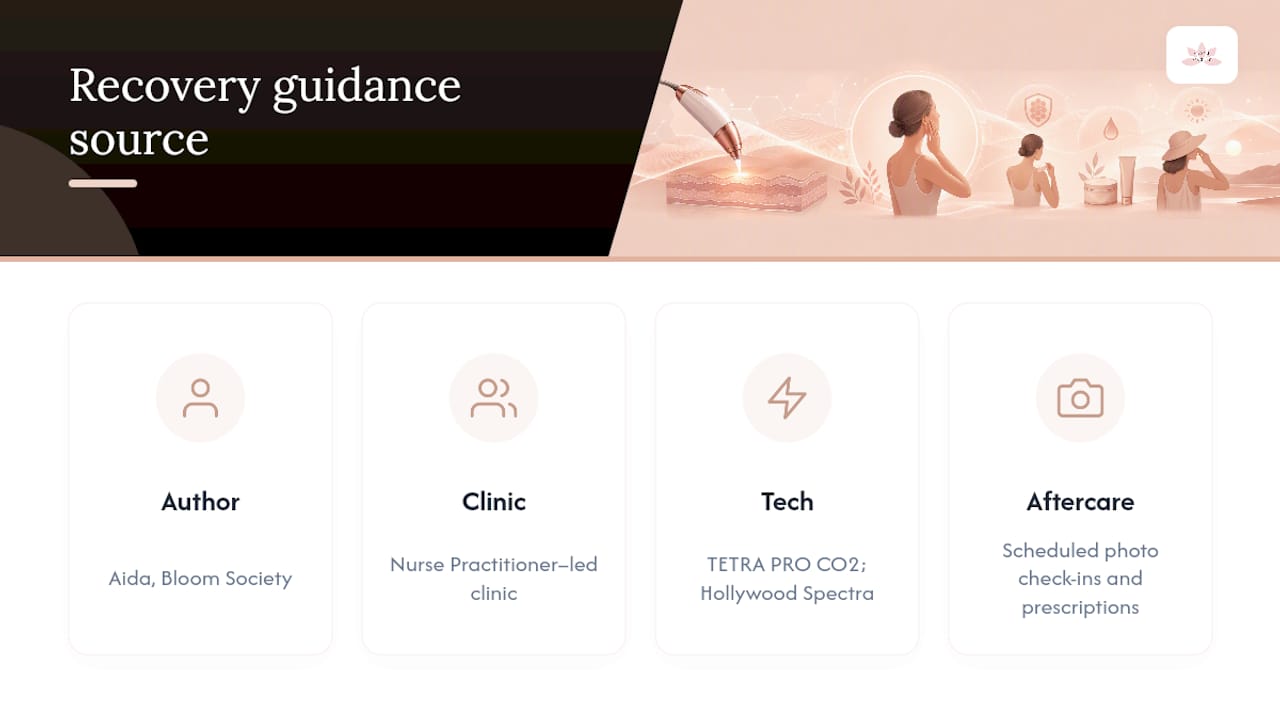
This guide was written by Aida, affiliated with Bloom Society, a Nurse Practitioner-led clinic offering CO2 laser resurfacing and structured follow-up care. Bloom Society uses TETRA PRO CO2 and Hollywood Spectra technology, with scheduled photo check-ins and prescription management built into aftercare so complications get caught early.
A clinician’s perspective on planning your recovery
Build in buffer days around anything important. Skip the shortcuts you find online and follow your own clinician’s instructions instead. Visible healing can feel discouraging for a stretch, so lean on people around you.
— Aida
Ready to plan your resurfacing recovery?
Bloom Society offers CO2 laser resurfacing under Nurse Practitioner-led care, with the Hollywood Carbon Laser Facial and related pigment treatments priced from $150 to $300 depending on the concern being treated.

Unlike a generic med-spa checklist, Bloom Society builds your aftercare protocol around your own skin, medical history, and schedule, so you’re not guessing which parts of a downloaded PDF actually apply to you. If cold sores, sensitive skin, or a big event in six weeks are on your mind, that’s exactly the kind of detail worth raising at consultation, not after treatment day. You can review the pre- and post-procedure guidelines beforehand or go straight to booking a consultation to talk through timing and expected downtime for your situation.
Where to read more on laser resurfacing recovery
For primary clinical guidance, see Mayo Clinic’s laser resurfacing overview and the NCBI Bookshelf chapter on dermatologic lasers.
This article is general information, not a substitute for advice from a qualified doctor. Consult a qualified healthcare professional about your own circumstances before acting on anything here.
Sources
FAQ
What’s the worst day after a CO2 laser?
Days 1 to 3 tend to be the hardest, since swelling and oozing peak in the first 48 to 72 hours. Skin feels tight, hot, and sunburned, and this is when strict ointment and cleansing routines matter most.
How long does it take to recover from a CO2 laser?
Surface healing typically completes within 7 to 14 days, though pinkness can persist for several weeks. Full collagen remodelling and final texture improvements continue for months afterward.
What can’t you do after a CO2 laser?
Avoid sun exposure, hot tubs, saunas, swimming, active skincare ingredients, exfoliation, makeup, and shaving until your provider confirms the skin has fully closed. Smoking and vaping should also be avoided since they slow healing by restricting blood flow.
How can I speed up healing after a CO2 laser?
Keep the treated area consistently moist with ointment, stay strict about sun avoidance, and follow your clinician’s cleansing schedule exactly. Follow-up photo checks can help catch any early signs of trouble before they slow down co2 laser recovery.
Recommended
Comments