Why Injector Skill Matters for Botox for Crow's Feet: Questions to Ask


Yes, Botox works for crow’s feet. When a qualified injector places onabotulinumtoxinA precisely into the orbicularis oculi muscle, the repeated creasing that forms those fan-shaped lines at the outer eye softens within days and generally lasts three to four months. The main safety trade off is technique, not the drug itself: correct placement avoids complications like eyelid drooping. Before booking, confirm your injector’s experience with periocular anatomy and disclose every medication and supplement you take.
TL;DR:
Precise placement of about 12 units of Botox across three points per side effectively softens crow’s feet, but dosage varies based on muscle strength and existing lines.
Injection accuracy is critical, with small margins for error to prevent complications like eyelid drooping, especially avoiding injection too high or too low near the orbital rim or cheekbone.
Results typically appear within three to four days, reaching full effect at around two weeks, and last about three to four months depending on individual muscle activity and metabolism.
Choosing an injector experienced specifically in periocular anatomy and treatment of crow’s feet is essential, as general experience does not guarantee safety and results in this delicate area.
Most side effects are minor and temporary, but incorrect technique can lead to serious issues like eyelid drooping or asymmetric smile; proper technique and careful patient screening are essential.
Table of Contents
How Botox for crow’s feet actually softens the lines
Crow’s feet form because the orbicularis oculi, the ring-shaped muscle circling your eye, contracts every time you squint, smile, or laugh. Do that thousands of times over a couple of decades and the skin above it stops springing back. Botox doesn’t fill the crease or resurface the skin. It blocks the nerve signal that tells that muscle to fire, so the skin above it stops folding in the same place, and the existing lines gradually smooth out as the muscle rests.
That’s the whole mechanism: a temporary, targeted neuromuscular pause. It’s why Botox reads as a “wrinkle relaxer” rather than a filler, and why it does nothing for lines caused by sun damage or lost collagen that show up even when your face is still. Those need a different approach, which is covered further down.
Clinical reports on dosing for this specific area are fairly consistent. Reviews describe about 12 units of Botox divided across three injection points per side as an effective range for lateral crow’s feet, with injections placed roughly one centimetre from the bony rim of the eye socket to limit how far the product spreads. Some injectors use Dysport instead, at higher unit counts because the two products aren’t measured on the same scale.
The injection zone itself is small and unforgiving:
Target muscle: the lateral orbicularis oculi, the portion of the ring muscle sitting just outside the corner of the eye.
Depth: superficial, just under the skin. Too deep risks affecting muscles that control eyelid position.
Distance from the bone: injectors stay clear of the orbital rim itself to reduce diffusion into muscles that shouldn’t be touched.
Zygomaticus proximity: injecting too low, near the cheekbone, risks weakening muscles used for smiling.
That margin for error is why dose isn’t a fixed number. A clinician adjusts units based on how strong your muscle contraction is, how deep the lines already are, and how your face has responded to previous treatments, if any. Someone with a subtle, early crease needs less product than someone with deep, long-standing lines carved in from years of squinting in the sun. This is also the section of your face where the skin is thinnest anywhere on the body, which is exactly why anatomy knowledge matters more here than almost anywhere else Botox gets used.
What to expect during a Botox appointment for crow’s feet
A crow’s feet appointment is short, usually 15 to 30 minutes including consultation, and most of that time is spent on assessment rather than the injections themselves.
Pro Tip: Bring a list of every medication and supplement you take, including over-the-counter ones like fish oil or aspirin. Several common supplements thin blood enough to increase bruising, and your injector needs to know before, not after.
Screening and history. Your injector asks about neuromuscular conditions, pregnancy or breastfeeding status, allergies, and any recent facial procedures. This is also when you disclose blood thinners, muscle relaxants, or antibiotics like aminoglycosides that can interact with botulinum toxin.
Marking the injection sites. With you sitting upright and smiling naturally, your injector marks where the muscle contracts most visibly. This active assessment matters more than looking at your face at rest.
Cleansing and, if needed, numbing. Most patients skip topical numbing for this area since the needle is fine and the injections are quick, but ice or a numbing cream is available if you’re sensitive.
The injections themselves. Expect three small injections per side, delivering a total in the range clinical reports describe, about 12 units split across those three points. Each injection takes a second or two. Most patients describe it as a quick pinch rather than significant pain.
Immediate aftercare instructions. You’ll be told to avoid rubbing the area, skip strenuous exercise for the rest of the day, and stay upright for a few hours.
Redness or small bumps at each injection site are normal and typically fade within an hour. A little bruising is common and generally resolves within a week; ice in the first 24 hours helps. What’s not normal: drooping of the upper eyelid, double vision, or asymmetry that develops over the following days rather than resolving. Bloom Society’s pre- and post-procedure guidelines walk through exactly what to watch for and when to call your clinic.
How long it takes to work and how long results last
Most people notice the first softening within three to four days, though some feel a subtle change even sooner. Full effect takes longer than people expect. The muscle needs up to two weeks to reach its maximum relaxation, and Mayo Clinic’s patient guidance confirms this timeline, noting that a touch-up before that two week mark can lead to over-treatment since the effect hasn’t fully settled yet.
Duration typically runs three to four months, though this varies more than most marketing suggests. A few things move that number:
Dose: higher units generally last a bit longer, up to a point of diminishing returns.
Muscle strength and activity: people with strong, expressive facial muscles, or those who squint a lot outdoors, tend to metabolize the effect faster.
Metabolic rate: some people simply process botulinum toxin faster than others, for reasons that aren’t fully mapped out.
Treatment history: repeat treatments over months or years sometimes train the muscle to relax more fully, so some patients report each round lasting slightly longer than the last, though this isn’t guaranteed for everyone.
Booking your next appointment before the effect fully wears off, rather than after the lines have deepened again, tends to produce the smoothest ongoing results. Waiting until you’re back to square one means starting from a stronger contraction pattern each time.
Side effects, safety, and the complications worth knowing about
Most side effects from Botox for crow’s feet are minor, local, and short-lived. Cleveland Clinic lists pain at the injection site, redness, swelling, and headache as the most commonly reported effects, and all of these typically clear up within a few days without any intervention.
By the numbers: the rarer complications, eyelid ptosis, dry eye, and unintended weakness in nearby muscles, are directly tied to injection placement and technique rather than the drug’s chemistry. That’s a mechanical, correctable risk, not a fixed side effect profile everyone faces equally.
Here’s where things can go sideways, and why:
Eyelid ptosis (drooping): happens when the toxin diffuses into the levator muscle that lifts the upper eyelid, usually because an injection was placed too high or too close to the orbital rim.
Dry eye or excessive tearing: can occur if the toxin affects the muscles controlling blinking or eyelid closure, disrupting the normal tear film distribution.
Asymmetric smile or cheek weakness: results from injecting too far down toward the zygomaticus muscle, which controls part of your smile.
Bruising: more common in people on blood thinners, aspirin, or certain supplements, and largely preventable by disclosing these beforehand.
Peer-reviewed anatomy reviews are specific about this: injecting too far above the lateral orbital margin risks ptosis, while injecting too far below risks affecting the muscles that control lip and cheek movement. The margin between an effective injection and a problematic one is measured in millimetres, which is the single biggest argument for choosing an injector who works in this area regularly rather than one who treats it occasionally.
Serious complications are uncommon when injections are placed correctly, and most resolve on their own as the toxin’s effect wears off over the following weeks. That’s cold comfort if you’re the one dealing with a drooping eyelid for a month, which is exactly why prevention through injector skill matters more than damage control after the fact.
Who should skip Botox or wait before treating crow’s feet
Some conditions make Botox around the eyes a clear no. An allergy to any ingredient in the formulation, including human albumin, rules it out immediately. Active infection or skin inflammation at the injection site is also an automatic pause until it clears.
Other situations call for extra caution rather than an outright ban. People with neuromuscular disorders such as myasthenia gravis or Lambert Eaton syndrome face a higher risk of exaggerated muscle weakness, since these conditions already impair the nerve muscle signalling that Botox interrupts. Pregnancy and breastfeeding aren’t studied enough to confirm safety, so most clinicians recommend waiting until afterward. Recent facial surgery in the treatment area is another reason to delay, since your injector needs to see healed, stable anatomy before mapping injection points accurately.
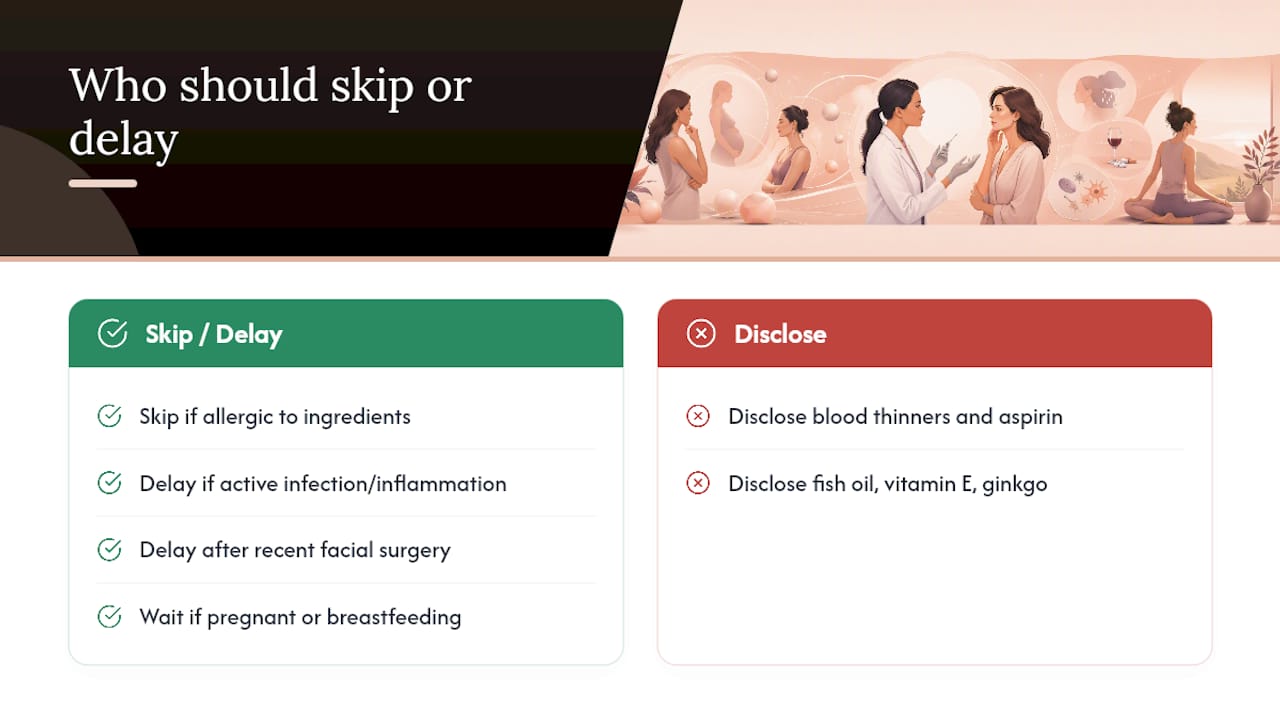
Medication disclosure matters just as much here as it does anywhere else in the body. Blood thinners, high-dose aspirin, and supplements like fish oil, vitamin E, or ginkgo all raise bruising risk. None of these are hard stops, but your injector needs to know so they can time your appointment, adjust technique, or simply set your bruising expectations accurately.
Choosing an injector who actually knows this part of the face
Price is the wrong first filter for this treatment. The eye area has thinner skin and tighter anatomical margins than almost anywhere else Botox gets used, and experts who specialize in this region point out that general injection experience doesn’t automatically translate to skill around the orbital rim.
Look for a physician or nurse practitioner with specific, ongoing experience in facial injectables and periocular anatomy, not just a certificate from a weekend course. Bloom Society’s approach to beginner Botox consultations walks new patients through exactly this kind of background before any injection happens.
Questions worth asking before you book:
How many crow’s feet treatments have you done, specifically, in the past year?
What unit range and injection pattern do you typically use for this area, and why?
How do you handle a complication like ptosis if it happens?
Can I see before and after photos of your own patients, not stock images?
What’s your protocol if I need a touch up or I’m not happy with the result?
Pro Tip: Ask to see the injector’s own before-and-after work, not the clinic’s marketing gallery. Stock photos tell you nothing about how this specific person’s hands perform around your eyes.
Red flags are easier to spot once you know what to look for: prices dramatically below the local range, credentials that exist only on social media, injections done in a group “Botox party” setting with no private consultation, or any provider who brushes off questions about risk instead of answering them directly. A confident, experienced injector welcomes these questions because they’ve answered them a hundred times before.
How Bloom Society approaches crow’s feet Botox
A nurse practitioner led clinic means the person assessing your muscle strength and mapping your injection points has the clinical training to read facial anatomy the way this treatment demands. Dosing isn’t templated. It’s built around how your muscle moves, how deep your lines already are, and what you’re realistically trying to achieve, whether that’s softening a crease or preventing one from deepening further.
That personalization extends past the appointment itself. Clients get clear pre and post procedure guidance covering what to avoid in the hours after treatment and what recovery should actually look like, which reduces the guesswork that usually drives people to Google their own bruising at midnight. The clinic’s injectables page outlines what a Botox consultation covers for anyone in Windsor–Essex or Detroit weighing their options before committing to an appointment.
The gap between what Botox promises and what most people actually get
The evidence on Botox for crow’s feet is genuinely strong. This isn’t a treatment resting on anecdote. What varies enormously, and what most articles gloss over, is execution. Botox is a commodity product; injector skill is not. Two patients can receive the same unit count from the same brand and walk out with entirely different results because one injector understood the difference between a millimetre too high and a millimetre too low.
The conventional advice, “ask about price and experience”, undersells how specific that experience needs to be. General injecting competence doesn’t transfer cleanly to the eye area, where the anatomy is dense and the margin for error is small. If you take one thing from this article, make it this: prioritize an injector who treats this specific area often, over one who simply offers it as a line item on a longer menu. Everything else, the exact unit count, the exact brand, matters less than that one decision.
— Aida
Ready to talk to someone who does this every day
Some clinics offer consultations that include a nurse practitioner who maps dosing to each client’s muscle pattern instead of running a one-size unit count on everyone who walks in. That matters most in an area of the face where a few millimetres separate a smooth result from a complication.

A consultation covers your medical history, your goals, and an honest read on whether Botox, a filler, or something else entirely fits your face best. The injectables page walks through what that first visit looks like, and if you’re ready to move forward, you can book online directly. Come with your questions. A good injector wants them asked before the needle comes out, not after.
Sources
For deeper reading, the peer-reviewed review on botulinum neurotoxin in ophthalmology covers dosing and anatomy in detail, and BOTOX’s official prescribing information lists approved uses and safety data directly from the manufacturer.
This article is general information, not a substitute for advice from a qualified doctor. Consult a qualified healthcare professional about your own circumstances before acting on anything here.
FAQ
Does Botox really work for crow’s feet?
Yes. It blocks the nerve signals causing repeated muscle contraction, and clinical reports confirm measurable softening of lateral crow’s feet within days of injection.
How much does Botox cost to get rid of crow’s feet?
Cost depends on unit count and regional pricing, since Botox is typically priced per unit rather than as a flat fee for the area; a consultation is the most reliable way to get an accurate quote for your specific dosing needs.
How long do Botox crow’s feet results last?
Most patients see results last three to four months, with onset starting within a few days and full effect reached by about two weeks.
Where should Botox not be injected for crow’s feet?
Injectors avoid placing product too close to the orbital rim or too low toward the cheek, since those positions raise the risk of eyelid drooping or unintended weakness in nearby smile muscles.
Are there alternatives to Botox for crow’s feet?
Dermal fillers address static lines and lost volume rather than muscle movement, while laser therapy and topical retinoids improve skin texture over time; many people combine these with Botox rather than choosing just one.
Recommended
Comments