


Menopause checklist: Ask these questions before progesterone for sleep

In people with sleep disruption tied to reproductive aging, oral micronized progesterone can improve deep sleep and cut night-time wakefulness under medical supervision. Randomized trials and systematic reviews back this up, mainly in postmenopausal women. It is not a proven fix for general insomnia, and starting it means a proper clinical assessment first.
TL;DR:
Progesterone significantly improves deep sleep and reduces night waking mainly in postmenopausal women with hormone-related sleep issues.
The strongest evidence supports oral micronized progesterone at 300 mg taken at bedtime, with limited data on other forms like creams.
Benefits are most likely when sleep problems began or worsened during perimenopause or postmenopause, especially alongside symptoms like hot flashes or sleep-disordered breathing.
Side effects are generally mild, including dizziness and fatigue, but a thorough medical review is essential before starting treatment.
General insomnia unrelated to hormonal decline shows little to no benefit from progesterone, emphasizing the importance of proper diagnosis and clinical assessment.
Table of Contents
What is progesterone, and how do levels change with age?
Progesterone is a hormone produced mainly by the ovaries after ovulation, and its most sleep-relevant byproduct is a metabolite called allopregnanolone. That metabolite is where most of the sleep action happens.
During a normal menstrual cycle, progesterone rises sharply in the luteal phase, then drops before your period starts. As women move through perimenopause and into postmenopause, that rise-and-fall pattern flattens out, and overall levels decline. This shift correlates closely with new or worsening sleep complaints, and it often arrives alongside:
Night sweats and hot flashes that fragment sleep multiple times a night
Lighter, less restorative sleep with more early-morning waking
Increased snoring or breathing pauses in some women as respiratory drive weakens
The role of reproductive hormones in sleep across a woman’s lifespan is well documented, and the menopausal transition is where progesterone’s decline hits sleep architecture hardest.
How progesterone affects sleep: the biology behind it
Allopregnanolone binds to GABAA receptors in the brain, the same receptor family targeted by benzodiazepines, but through a gentler, more physiologic pathway. This action promotes slow-wave sleep, the deep, restorative stage that tends to erode with age and hormonal decline.
Progesterone also stimulates breathing. It increases respiratory drive, which can reduce both central and obstructive apnoea episodes in some women, a mechanism documented in research on progesterone as a respiratory stimulant in sleep-disordered breathing. That dual action, calming the brain while supporting steady breathing, is unusual among sleep aids.
Here’s the contrast that matters clinically:
Conventional hypnotics (benzodiazepines, Z-drugs) often sedate you into sleep but tend to suppress slow-wave sleep in the process.
Progesterone works differently: it restores the deep sleep stage that got disrupted in the first place, rather than just knocking you out.
Pro Tip: If you wake up groggy after a sedative but still feel unrested, that’s a sign the drug suppressed deep sleep rather than restoring it. Progesterone tends to leave people feeling clearer in the morning because it works with your sleep architecture instead of against it.
What do clinical trials say about progesterone and sleep?
The strongest evidence comes from a randomized, double-blind, placebo-controlled trial testing 300 mg of oral micronized progesterone at bedtime. Compared to placebo, it reduced wake after sleep onset by roughly 53% and increased slow-wave sleep by about 50% in postmenopausal women.
That single trial doesn’t stand alone. A systematic review of micronized progesterone for sleep found consistent improvement across several sleep outcomes, with most of the supporting studies enrolling postmenopausal women specifically.
The pattern across trials is narrow but real: progesterone helps most reliably when the sleep problem traces back to hormonal decline, not when insomnia stems from stress, schedule disruption, or unrelated medical causes.
Before you assume this applies to your situation, weigh the limitations:
Most trials are small, often a few dozen participants, and short in duration
Outcome measures vary between studies (subjective sleep diaries versus objective polysomnography)
Almost all the strongest data comes from postmenopausal women, so generalizing to younger women or men is not supported
Who actually benefits from progesterone for sleep?
The evidence points to a fairly specific group. If your sleep problems started or worsened alongside perimenopause or postmenopause, especially with night sweats or suspected sleep-disordered breathing, you’re in the population these trials studied.
If you’re younger and dealing with insomnia unrelated to hormonal shifts, say from anxiety, shift work, or chronic pain, progesterone has little supporting evidence for you specifically.
Certain conditions require caution and a full medical review before starting progesterone at all:
Pregnancy or breastfeeding
A personal history of hormone-sensitive cancers (like some breast cancers)
Clotting disorders or a history of blood clots
Severe liver disease, since the liver metabolizes oral progesterone
None of this is a do-it-yourself decision. A clinician needs to weigh your full history before prescribing.
Forms and dosing: what the evidence actually supports
Not every progesterone product carries the same evidence, and this distinction trips a lot of people up.
Oral micronized progesterone is the form used in the trials showing sleep benefit, typically dosed at 300 mg taken at bedtime.
Topical creams and vaginal formulations don’t reliably reach the same systemic blood levels as the oral form, and research from CeMCOR notes they lack consistent sleep data.
Timing matters: taking it right before bed aligns the drowsy effect with your sleep window instead of daytime hours.
Pro Tip: Take your first dose on a night when you don’t have to be anywhere early the next morning. Some women feel a “drunk” or unsteady sensation the first few nights as their body adjusts, and you don’t want to be driving if that happens to you.
What are the side effects and safety concerns?
Most side effects are mild and settle within the first week or two. The most commonly reported ones include:
Dizziness or lightheadedness, especially on the first few nights
Daytime fatigue if the dose lingers into the morning
Breast tenderness and bloating
A brief “drunk” or unsteady feeling shortly after the first doses
More serious considerations require your clinician’s input. Combining progesterone with other central nervous system depressants (alcohol, sedatives) can compound drowsiness. When progesterone is paired with estrogen in hormone therapy, thromboembolic risk becomes a relevant factor to discuss, and liver disease changes how the body clears the drug. Clinical guidance on progesterone for sleep is consistent on one point: this isn’t a supplement to self-prescribe. Clinicians typically schedule a follow-up within a few weeks to check whether sleep has improved and whether side effects have settled, adjusting or stopping treatment based on that response.
How do you talk to your clinician about this?
Walking into an appointment prepared gets you a faster, more useful conversation. Bring these with you:
A two-week sleep diary noting when you wake, how often, and how you feel in the morning
A full list of current medications and supplements, including anything for anxiety or pain
Your menstrual or menopause timeline, including when symptoms started
Any family history of hormone-sensitive cancers or clotting disorders
Ask directly: How likely is this to help my specific sleep pattern? Which form and dose would you start me on? Given my history, are there any red flags? Most clinicians propose a defined trial period, sometimes alongside objective testing for sleep-disordered breathing if snoring or breathing pauses are part of the picture.
The clinical view from Bloom Society
Bloom Society’s Nurse Practitioner-led model treats hormone-related sleep complaints as part of a full assessment, not a standalone prescription. In practice, patients who respond best are those whose sleep disruption clearly tracks with perimenopausal or postmenopausal changes. The early “unsteady” first-night effect is common enough that it’s worth planning around. Every plan starts with medical supervision, not guesswork.
What people get wrong about progesterone and sleep
Most articles on this topic treat progesterone like a natural sleep supplement you can just try. That framing undersells what the trial data actually shows and oversells how universal the benefit is. The 300 mg oral micronized trial produced a real, measurable effect on slow-wave sleep, but only in a specific population: postmenopausal women whose sleep problems tracked with hormonal decline.
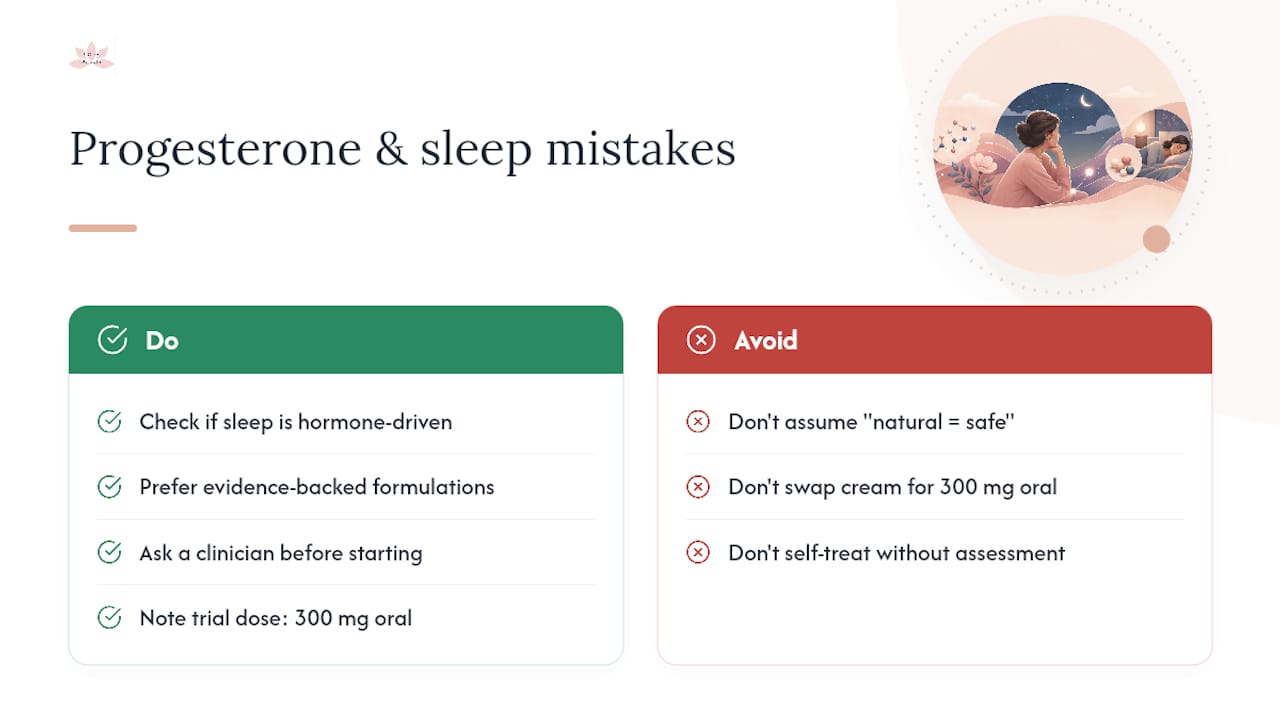
The conventional advice gap is this: people fixate on the “natural hormone, therefore safe and simple” idea, while skipping the part where form and dose matter enormously. A vaginal cream and a 300 mg oral capsule are not interchangeable, and treating them as such is where a lot of anecdotal disappointment comes from.
If you take one thing from the evidence, prioritize this: get an honest read on whether your sleep problem is actually hormone-driven before you assume progesterone is the answer. That’s a clinical judgment, not a guess you make from a symptom checklist. The people who benefit most are the ones who get assessed first and treated second.
— Aida
Ready to talk to someone about hormone-related sleep issues?
Hormone therapy can be considered personalized medicine, rather than a one-size prescription. A first appointment starts with a full history, including your sleep pattern, menstrual or menopause timeline, and any conditions that would rule certain treatments out. From there, a treatment plan is developed tailored to symptoms and health profile, which may involve progesterone, other hormone approaches, or combinations suited to individual needs.

Follow-up appointments monitor response and adjust treatment plans as needed to evaluate effectiveness. If disrupted sleep has you wondering whether your hormones are behind it, the hormone therapy page walks through what’s involved, and you can book a consultation online to get a proper assessment started.
This article is general information, not a substitute for advice from a qualified doctor. Consult a qualified healthcare professional about your own circumstances before acting on anything here.
Sources
FAQ
What are the side effects of taking progesterone at night?
The most common effects are dizziness, fatigue, breast tenderness, and bloating, with some women reporting a brief “drunk” or unsteady sensation the first few nights. These effects typically ease within the first week or two as your body adjusts.
What happens if you take progesterone without estrogen?
Progesterone alone can still influence sleep because its metabolite allopregnanolone acts directly on GABAA receptors, independent of estrogen. Whether it’s used alone or alongside estrogen depends on your specific hormone therapy plan and should be decided with your clinician.
Will taking progesterone help me sleep?
For people whose sleep disruption relates to perimenopausal or postmenopausal hormonal decline, oral micronized progesterone has shown real benefit in clinical trials, including reduced wake after sleep onset and increased slow-wave sleep. It’s less likely to help if your insomnia isn’t hormone-related, which is why a clinical assessment matters before starting.
What helps more with sleep, estrogen or progesterone?
Progesterone has more direct trial evidence for improving sleep architecture, particularly slow-wave sleep, through its calming effect on the brain. Estrogen mainly helps sleep indirectly by reducing hot flashes and night sweats that interrupt sleep, so many hormone therapy plans use both together depending on your symptoms.
Recommended
Comments