Lip Filler Swelling Peaks in 24–48 Hours, Clinician's Day Timeline

Most swelling peaks within 24 to 48 hours after injection, then improves noticeably by day 4 to 7. Everyday puffiness usually settles enough for you to feel comfortable in public within a week, with final results visible after a few weeks. Seek urgent care if you notice severe pain, colour change in the lips, or symptoms like fever, since those fall outside normal healing.
TL;DR:
Swelling peaks within 24 to 48 hours after injection and usually resolves completely within one to two weeks, with final results visible after a few weeks.
Larger injection volumes, superficial placement, and certain filler formulations can prolong swelling and increase its intensity.
Applying cold, elevating the head, avoiding heat and high salt foods, and careful use of pain relief can help reduce swelling during recovery.
Severe pain, color changes, blistering, or fever indicate complications requiring urgent medical attention, not routine aftercare.
Day two is typically the most stressful for patients, but swelling at this stage does not reflect final results or treatment quality.
Table of Contents
Lip filler swelling stages: a day-by-day timeline
Swelling after lip injections follows a fairly predictable arc, even though everyone’s face responds a little differently. Knowing what happens on each day helps you tell normal healing from something worth calling your injector about.
Day 0 (injection day): Expect immediate puffiness, numbness from the lidocaine mixed into most fillers, and small red dots where the needle or cannula entered. Lips often look bigger than you expected, and that’s the local anesthetic and fluid talking, not the final shape.
Days 1 to 2: This is peak swelling. Lips can look uneven, lopsided, or larger on one side than the other. Many people call this the “regret phase,” because the mirror looks nothing like what they pictured. It’s temporary and expected, not a sign the treatment went wrong.
Days 3 to 4: Swelling starts dropping noticeably. You’ll begin to see the actual contour emerging from underneath the puffiness, and any bruising typically shifts from purple to a yellowish green.
Days 5 to 7: Most swelling has resolved by this point for most patients. A prospective study on short-term swelling after lip injection found that all swelling had cleared within about a week, and patients who skipped a touch-up often resolved within just a few days. Small lumps or firm spots may linger but usually soften on their own.
Weeks 2 to 4: Final settling happens here. Any remaining texture from the gel integrating into tissue smooths out, and this is genuinely the right window to judge your results or ask about an adjustment.
Bruising follows its own timeline, often outlasting the swelling itself by a few days depending on where the injection sites were and how you bruise in general.
Why lips swell after filler injections
Swelling isn’t a side effect of a bad injection. It’s your body’s normal reaction to a few things happening at once.
Tissue trauma: Needles and cannulas puncture skin and soft tissue, triggering local inflammation and fluid buildup, the same way a bruise or scrape swells.
Hyaluronic acid’s water-loving nature: HA fillers are hydrophilic, meaning they attract and hold water. Different gel formulations pull in different amounts, which is part of why one filler brand can feel noticeably puffier than another.
Injection volume, depth, and speed: Larger volumes, more superficial placement, and faster injection technique all tend to increase oedema.
Individual biology: Circulation, certain medications (blood thinners, for instance), high salt intake, and even recent dental or facial procedures can all shift how much you swell.
Research on filler formulation backs this up directly. A review of hyaluronic acid filler properties found that swelling intensity varies by gel technology and manufacturing process, meaning your injector’s product choice genuinely affects your early days of recovery. A randomized comparison of two HA fillers even found one product caused measurably less early swelling, redness, and tenderness than the other.
How long lip filler swelling really lasts
For most people, the pattern looks like this: swelling peaks at 24 to 48 hours, drops significantly by day 4, and returns close to baseline within about one to two weeks. Full settling, where any last texture smooths out, generally happens within a few weeks.
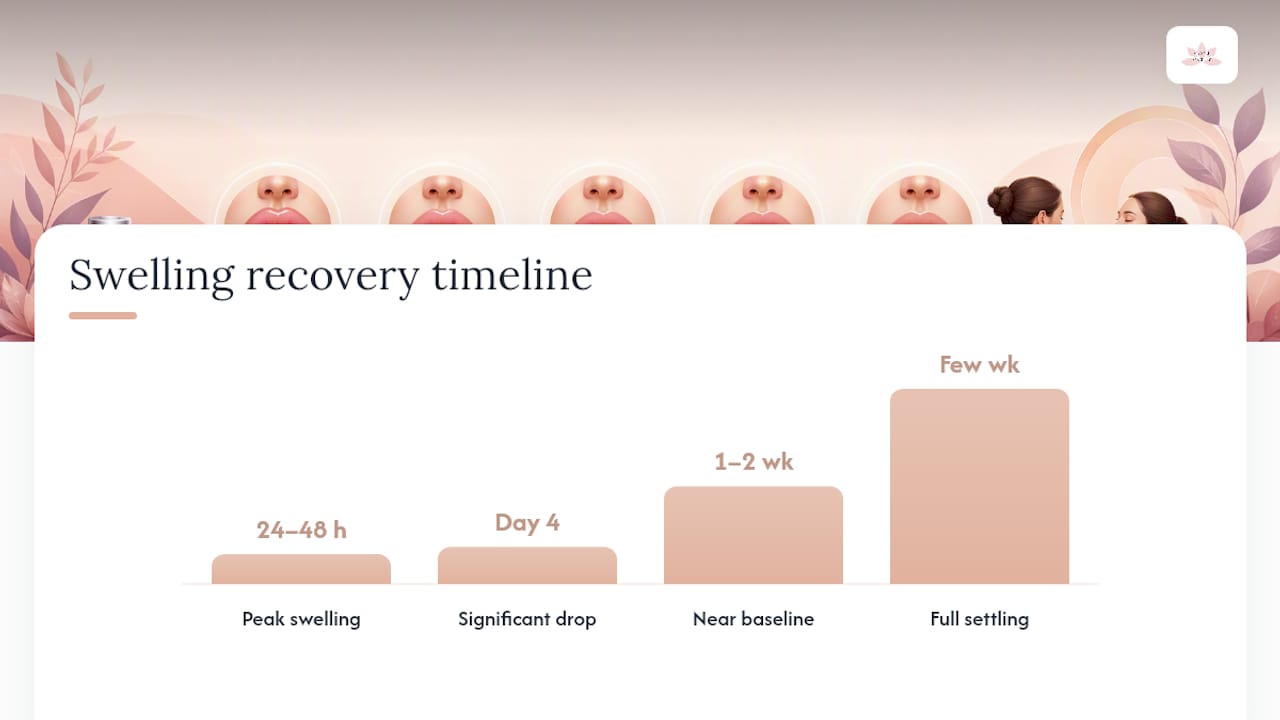
That timeline lines up with clinical data. That’s a fast, uneventful recovery for the large majority of patients, though a smaller group takes longer.
A few things reliably stretch out the timeline:
Larger injection volumes, which naturally mean more tissue disruption to recover from.
Superficial placement, since HA sitting close to the surface attracts water and can mimic persistent swelling that takes longer to resolve, occasionally requiring hyaluronidase if it doesn’t settle.
Certain hydrophilic filler formulations, as noted above, that simply hold more water than others.
Medications or immune responses, including blood thinners, certain supplements, or an unusually reactive immune system.
How to reduce lip filler swelling: a practical aftercare checklist
You have real control over how comfortable the first week feels, even if you can’t speed past the biology entirely.
Use cold intermittently. Apply a cold pack for about 10 minutes on, then 10 minutes off, especially in the first 24 hours. Clinical guidance on managing filler-related oedema notes that strong trial evidence for ice is limited, but it’s low risk and most patients find it genuinely helps with comfort.
Sleep with your head elevated for the first couple of nights to limit fluid pooling in the lips overnight.
Avoid pressure on your lips — no straws for the first day or two, and be mindful with kissing or resting your face on your hand.
Skip strenuous exercise, hot baths, saunas, and alcohol for 48 to 72 hours. Heat and increased blood flow both worsen swelling, and alcohol thins blood and raises bruising risk.
Cut back on high-salt foods for a few days, since sodium encourages your body to retain fluid.
Use over-the-counter pain relief carefully. NSAIDs can help with discomfort where appropriate, and antihistamines can ease mild allergic-type reactions, but check with your provider before combining anything with medications you’re already on.
Pro Tip: Take a “day zero” photo before you leave your appointment. It’s the single easiest way to track genuine progress instead of judging your lips against a mental image of the swelling at its worst.
For more stubborn or unusual swelling, clinicians have additional tools. Steroids can calm inflammation directly, antihistamines address allergic components, and hyaluronidase can dissolve HA filler outright when swelling signals a placement problem rather than routine healing. Full aftercare guidance, including what to do in the first 48 hours, is worth reviewing before your appointment, not just after.
Warning signs: when lip swelling isn’t normal
Most swelling is just tissue doing what tissue does. A small subset of cases need urgent attention.
Sharp, escalating pain that gets worse instead of better over hours, not days.
Pale, white, or blue-tinged skin on or around the lips, which can signal vascular compromise.
Blistering, spreading redness, or fever, which point toward infection rather than routine swelling.
If you see any of these, stop what you’re doing, contact your injector immediately, and get seen urgently. According to a clinical review of filler complications in the lip and perioral area, vascular occlusion and infection are uncommon but require rapid assessment. Experienced injectors increasingly use ultrasound to map vessels and confirm filler placement when something looks off, and hyaluronidase may be used immediately if a vascular issue is suspected.
The clinician’s take: why the swelling peak isn’t the verdict
The two-day mark is where most people panic, and it’s also the least useful day to judge your results. Experienced injectors choose products and placement depth specifically to limit oedema, but biology still needs its window. That early anxious feeling near peak swelling is a normal, well-documented reaction, not a sign of a mistake. Wait the full two to four weeks before deciding you need an adjustment. Your lips at day two are not your lips at day fourteen.
— Aida
Book a swelling check with Bloom Society
If your swelling feels off, or you’d rather have a professional eye on your results before drawing conclusions, You can access a nurse practitioner-led team that treats lip filler recovery seriously. Unlike a quick consult where any follow-up concern gets brushed off, Bloom Society’s injectables team in Windsor–Essex and Detroit can assess whether your swelling is on track, adjust your aftercare plan, or administer hyaluronidase if something needs correcting.

If you’re still deciding on treatment, learn more about the nurse practitioner-led approach behind every injection at Bloom Society. If you’ve already had filler and something feels wrong or you just want peace of mind, book an appointment online and get a proper assessment instead of guessing from a mirror.
Sources
This article is general information, not a substitute for advice from a qualified doctor. Consult a qualified healthcare professional about your own circumstances before acting on anything here.
FAQ
What helps lip filler swelling go down?
Intermittent cold packs, head elevation, and avoiding heat, alcohol, and high salt intake for the first 48 to 72 hours all help. Most swelling resolves on its own within a week without any special intervention.
Why are my lip fillers so swollen?
Swelling comes from injection trauma combined with hyaluronic acid’s tendency to attract water, and it’s normal to peak at 24 to 48 hours before improving steadily. Larger volumes, superficial placement, or certain filler formulations can make swelling more noticeable or longer lasting.
Is 0.5 ml of lip filler noticeable?
Yes, a small amount is enough to change lip shape and volume visibly, and it will swell like any other injected volume in the first few days. The final, settled look only becomes clear after the 2 to 4 week healing window.
What are the first signs of lip fillers gone wrong?
Sharp or worsening pain, skin turning pale, white, or blue, blistering, or fever and spreading redness are all signs that need urgent attention rather than routine aftercare. Contact your injector immediately if you notice any of these, since prompt assessment and treatment like hyaluronidase can prevent lasting problems.
Recommended
Comments