Massage can ease the muscle tension that often travels with a headache, and it is most useful for tension-type headaches, the dull, band-like kind that settles in the temples, forehead, neck and shoulders. Gentle self-massage is a sensible first step at home. A hands-on session with a clinician who looks at your whole picture is the better step when headaches keep coming back. We offer massage at our Nurse Practitioner-led clinic in Windsor–Essex, and this guide explains what to expect from it, what to try yourself and which warning signs mean you should skip the massage and get medical care.
TL;DR
- Massage works best on tension-type headaches, where tight muscles in the jaw, temples, neck and shoulders are part of the pain.
- Some trials show fewer migraines with massage, and a 2024 meta-analysis found myofascial release reduced tension-headache pain.
- For self-massage, use slow, firm, gentle pressure with your fingertips on the temples, base of the skull, jaw and shoulders.
- A sudden, severe headache, vision changes or trouble speaking are emergencies. Call 911 rather than reaching for a massage.
- If headaches are frequent, a clinic visit lets someone assess your neck, jaw, stress and sleep together.
Table of Contents
- Why massage and headaches go together
- What research says about massage for headaches
- Tension headaches and migraines: how massage fits each
- Head massage benefits beyond the headache itself
- How to self-massage for a tension headache
- What a clinic massage can add
- Book massage with our Windsor–Essex team
- Safety: who should take care, and when to get medical help
- Our perspective
- FAQ
- Sources
Why massage and headaches go together
A tension headache usually feels like steady pressure on both sides of the head, often with sore neck and shoulder muscles. Mayo Clinic’s self-care advice for these headaches includes gently massaging the temples, scalp, neck and shoulders with your fingertips, and using heat on tense neck and shoulder muscles.
The practical logic is simple. Hours at a desk, a clenched jaw, poor sleep and stress keep the muscles around the skull and neck switched on. Massage lets them let go, and that can take the edge off the pain.
The areas that matter most are the same ones people point to when a headache starts:
- The jaw and temples. Clenching or grinding loads the chewing muscles, which sit right beside the temples.
- The base of the skull. Small muscles here are strained by looking at a screen or phone.
- The neck and upper shoulders. These carry the weight of the head all day.
If jaw tightness is a big part of your pattern, our article on TMJ massage benefits goes deeper on that area. Self-massage around the jaw and face is also covered in this guide to easing jaw and facial tension.
What research says about massage for headaches
The research is still growing, and the encouraging findings are worth knowing.
Migraine. The U.S. National Center for Complementary and Integrative Health (NCCIH) reports that in a 2016 randomized trial of 64 people, migraine frequency decreased in both the lymphatic drainage and the traditional massage groups compared with a waiting list. The Canadian Chiropractic Association’s headache guideline goes further: it recommends weekly 45-minute massage focused on the back, shoulders, neck and head to reduce the frequency of episodic migraine.
Tension-type headache. A 2024 meta-analysis found that myofascial release reduced pain intensity and disability in tension-type headache. Myofascial release is a slow, sustained pressure technique aimed at the connective tissue around muscles. The authors suggest the connective tissue can sense pain and pressure, and that stimulating it may influence blood flow to the head.
Trigger point work. In a six-week trial of head and neck trigger point massage, researchers found that both massage and the comparison treatment reduced headache frequency, and people’s own reports showed a greater improvement with massage. Trigger points are tender knots in a muscle that can refer pain elsewhere, such as from the neck to the head.
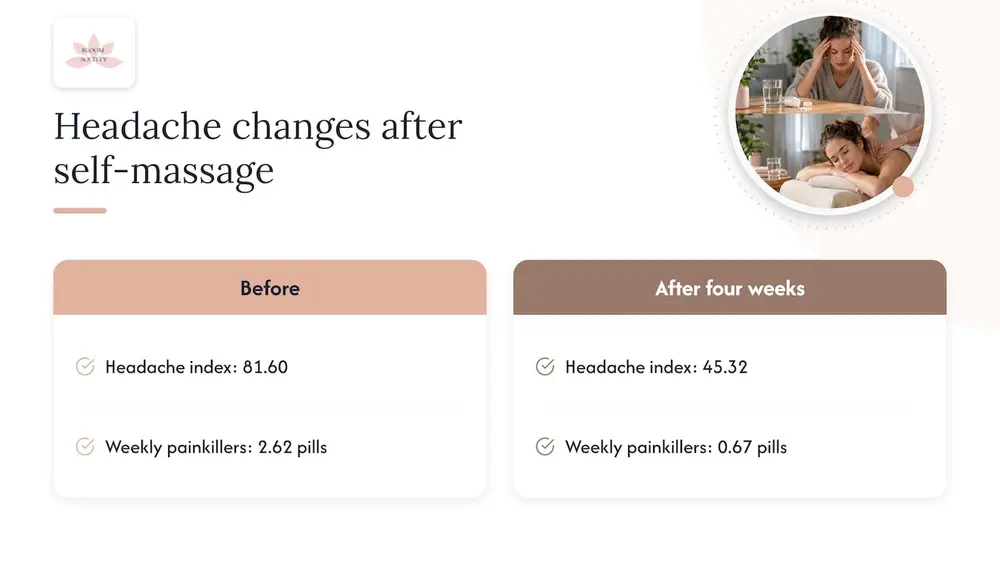
Self-massage. A 2021 randomized trial in people with chronic tension-type headache used trigger point self-massage at eight points, three times a day for four weeks. The headache index fell from 81.60 to 45.32 with no adverse effects reported, and weekly painkiller use dropped from 2.62 pills to 0.67. The authors also noted the effect seemed to appear straight away.
In short, the evidence supports massage as a reasonable, low-risk part of a headache plan, especially for muscle-related pain and for stress that feeds the cycle.
Tension headaches and migraines: how massage fits each
The two behave differently, so the approach does too.
Tension headaches
This is where massage is the most natural fit. A massage therapist quoted by Live Science says the usual trouble spots are the jaw, temples, neck and shoulders, and that slow, firm, relaxing techniques work best because light, stimulating strokes can irritate. Think steady pressure, not tickling or rubbing.
Migraine
Migraine is a neurological condition with its own treatment, and massage is a supportive extra. Alberta Health Services’ migraine care instructions suggest having someone gently massage your neck and shoulders, using a warm, moist towel or a heating pad on low, and resting in a quiet, dark room. The same Live Science piece notes that self-massage during a migraine can help reduce the stress and muscle tension that come with it.

If you get migraine with aura (visual disturbances before the pain), tell your doctor and your massage provider before booking neck work. The Canadian Chiropractic Association guideline notes that migraine with aura may be a risk factor for cervical artery dissection, a tear in a neck artery, which is one more reason to have your headaches assessed first.
Head massage benefits beyond the headache itself
People who book head and neck massage often want more than pain relief. A slower pace, warmth and a quiet room help the nervous system settle, and that matters because stress is a common headache trigger. Scalp, neck and shoulder work can also leave you feeling looser and more rested, and better sleep tends to mean fewer headache days.
That is why we think of massage as part of a bigger picture. Our piece on what one massage session can do for stress explains how a single visit fits into a wider plan.
How to self-massage for a tension headache
Self-massage costs nothing and takes five minutes. Verywell Health’s tension headache guide describes the basic approach: sit with your shoulders lowered and your neck and back upright, find the tight areas and make small circles with your fingers, focusing on the temples, base of the skull, jaw muscles and neck.
- Set up. Sit comfortably, drop your shoulders away from your ears and lengthen your neck. Breathe slowly.
- Base of the skull. Place the pointer and middle fingers of each hand at the centre of the base of your skull, fingertips touching. Press gently and slide the fingers outward or downward, as Healthline’s self-massage guide describes. Then make small circles over tense spots.
- Temples. Use your fingertips for slow, small circles. Keep the pressure firm but comfortable.
- Jaw. Find the muscle just in front of your ears, where it bulges when you clench. Circle gently, then open your mouth slightly and let the jaw hang loose.
- Neck and shoulders. Squeeze the muscle between your neck and shoulder with the opposite hand and hold for a few seconds. Repeat on the other side.
- Add warmth. Heat on tense neck and shoulder muscles can help them relax, as Mayo Clinic notes.
Where it goes wrong: pressing too hard, working a spot for ten minutes or using quick, light strokes. Aim for slow and steady. If a spot gets more painful or you feel tingling or numbness, stop.
Self-massage is a good daily habit. A hands-on session reaches places your own hands cannot, like the middle of the upper back, and a trained provider can adjust the pressure to what your muscles need on the day.
What a clinic massage can add
When headaches keep returning, the difference with a professional session is assessment and personalization. Someone looks at where you hold tension, how you sit and sleep, whether jaw clenching is involved and what else is going on, then tailors the pressure and areas accordingly.
This is how we work at Bloom Society. We are a Nurse Practitioner-led clinic in Windsor–Essex, and our approach combines medical expertise with a focus on honest recommendations matched to your goals and budget. Massage sits alongside our other wellness services, including counselling and hormone therapy, so if stress, sleep or hormonal changes seem to be driving your headaches, there is a team to talk it through with.
For people who clench or grind, we also offer injectable treatment for the jaw muscles. Our guide to six-point Botox for the masseter explains what Canadian clinics check for safety.
Book massage with our Windsor–Essex team
Our massage service is for residents of Windsor, Tecumseh, LaSalle, Amherstburg, Lakeshore and the surrounding area who want a calm, personalized session for neck, shoulder and head tension. You can see our massage and wellness services and book online directly.
Tell us when your headaches happen, where you feel them and what you have already tried. We will recommend what suits your situation, including whether a different service, such as a customized facial for relaxation, would suit you better.
Safety: who should take care, and when to get medical help
Massage has a good safety record. NCCIH says that massage appears to have few risks when performed by a trained practitioner, though people with health conditions and pregnant women may need to avoid some types. Serious problems such as blood clots, nerve injury or fractures are rare, and some involved vigorous styles like deep tissue massage. For headaches, gentle to moderate pressure is the right choice.
Healthline lists conditions where self-massage may be unsafe, including fractures, burns, healing wounds, bleeding disorders, blood-thinning medication, deep vein thrombosis, severe osteoporosis and cancer. If any of these apply, talk to your doctor before you massage, and tell your provider before a session. Healthline also advises speaking with a healthcare professional first when pain is intense or ongoing.
Headache warning signs
Call 911 for sudden vision changes or sudden trouble speaking, and seek immediate care if the headache gets much worse, per Alberta Health Services. The Canadian Chiropractic Guidelines list further red flags needing emergency assessment, including a thunderclap headache (peak pain within moments), stroke or artery dissection symptoms, meningitis signs and acute eye emergencies. The same guidelines stress that a new or changing headache can need medical assessment even when your neck is sore.
Taking pain medicine more than two days a week can cause medicine-overuse headaches. If that sounds like you, call your doctor or a nurse advice line. In Ontario, Telehealth Ontario is a free nurse line.
Our perspective
We see headaches as a whole-person problem. Tight muscles are often the part you can feel, but sleep, stress, jaw habits and hormones are usually in the picture too. That is why we pair hands-on care with an honest conversation. A relaxing massage can be a real help for the neck, shoulders and head, and we would rather match you to what fits your goals and budget than sell you something you do not need. Because we are led by a Nurse Practitioner, we can look at the wider picture, from stress and counselling to hormone therapy, and work with you on a plan. If you clench your jaw, there are also options in our injectables menu that we can talk through. Start with gentle self-massage this week, then book a session if the pattern keeps returning. Your muscles and your mood both respond to steady, consistent care. Aida
FAQ
Does massaging your head get rid of a headache?
For many tension headaches, gentle pressure on the temples, scalp, neck and shoulders can take the edge off the pain, and Mayo Clinic lists it among its self-care steps. Results vary from person to person. Combine it with warmth, water, rest and a quieter environment.
Can massage help migraines?
Massage is a supportive extra rather than a migraine treatment. In one 2016 trial, migraine frequency decreased in the massage groups compared with a waiting list. Alberta Health Services suggests gentle neck and shoulder massage during a migraine, along with rest in a dark, quiet room.
How often should I get a massage for tension headaches?
There is no single schedule. The Canadian Chiropractic Association guideline cites weekly massage for migraine frequency, and one self-massage trial used three short sessions a day for four weeks. We suggest starting with daily self-massage and booking a session when headaches keep returning, then adjusting the rhythm to how you respond.
Can massage cause a headache?
Some people feel mild tiredness or a headache after a session, especially after very firm work. Drink water, rest and ask your provider for lighter pressure next time. If the pain is severe or sudden, treat it as a warning sign and get medical care.
Where can I book massage in Windsor–Essex?
We offer massage at Bloom Society, serving Windsor, Tecumseh, LaSalle, Amherstburg and Lakeshore. You can book online and tell us about your headaches when you do.
Sources
- Tension-type headaches: Self-care measures for relief, Mayo Clinic
- Massage Therapy for Health: What the Science Says, NCCIH
- Headaches: What You Need To Know, NCCIH
- Clinical Practice Guideline for the Management of Headache, Canadian Chiropractic Association
- Myofascial Release for the Treatment of Tension-Type Headache, 2024 meta-analysis
- Myofascial trigger point-focused head and neck massage, 2015 trial
- Efficacy of trigger points self-massage in chronic tension-type headache, Neurology Asia
- Can you use massage for headache relief? Live Science
- Migraine Headache: Care Instructions, Alberta Health Services
- Self-Massage: How to Massage Your Neck, Feet, Back, Healthline
- 10 Ways to Relieve a Tension Headache at Home, Verywell Health
- Cervicogenic and Tension-Type Headaches, Canadian Chiropractic Guidelines
Recommended
This article is general information, not medical advice. Results vary from person to person, and a consultation is needed to decide whether a treatment is right for you. Book a consultation.