
Book your facial one to four days before the event if it is a gentle, hydrating treatment from a provider you already know. Book it one to two weeks ahead if it involves exfoliation, extractions or anything that could leave you pink. Leave peels and lasers for at least two weeks out. The rest of this guide shows how to fit those windows to your skin, your calendar and the kind of event you are heading to.
TL;DR
- A calm, hydrating facial works best one to four days before an event. Anything stronger needs a longer buffer of one to two weeks, and peels or lasers about two weeks.
- Do not try a new provider or a new product right before a big day. A good treatment should not leave you red, so go where you trust the results.
- Skip shaving and waxing your face for 24 to 48 hours before a facial, and keep heavy makeup off for about 48 hours afterward.
- For weddings and milestone events, start a plan 6 weeks to several months ahead, with the lightest treatment saved for the final days.
- Not sure what suits your skin? A nurse practitioner-led consult in Windsor–Essex can map the schedule backward from your date.
Table of Contents
- The short answer on timing
- Why one week can be too soon and one day can be just right
- If it is your first facial, or your skin is sensitive
- A countdown from six weeks out to the day itself
- Before the facial: shaving, waxing and what to leave alone
- After the facial: makeup and aftercare
- Choosing who does it
- Plan your event skin with us in Windsor–Essex
- FAQ
- Sources
The short answer on timing
There is no single perfect day, because “facial” covers everything from a soothing hydration treatment to a deep, exfoliating one. What matters is how much your skin reacts and how long it takes to settle.
One Canadian beauty feature reports that experts suggest booking a facial one to four days before an event. The same piece advises planning ahead and avoiding a new provider before a big day such as a wedding or a work speech. Practical advice you will see elsewhere says one to two weeks, which gives room for redness, irritation or a breakout to calm down. Both are right, for different facials.
Here is how we would line it up:
| Type of treatment | Suggested timing before your event | Why |
|---|---|---|
| Hydrating or soothing facial (familiar provider) | 1 to 4 days | Plumper, calmer-looking skin with little to no downtime |
| Customized facial with exfoliation or extractions | 1 to 2 weeks | Time for any pinkness or small breakouts to settle |
| Chemical peel | About 2 weeks or more | Skin may flake or feel tight for several days |
| Laser or resurfacing | Several weeks, depending on the treatment | Surface healing takes time and needs its own plan |
| Injectables (Botox, filler) | Ask at consult; often weeks, not days | Results settle gradually and small bruises can happen |
These are planning windows, not promises. Skin varies, and a practitioner who has seen your skin will refine them.
Why one week can be too soon and one day can be just right
Think of a facial as two jobs. The first is correction: clearing congestion, smoothing texture, calming sensitivity. The second is polish: hydration, glow, a rested look.
Correction takes time and can make skin look worse before it looks better. That is why the correction work belongs one to two weeks out. Polish has no downtime, so it can sit right next to the event.
A celebrity facialist interviewed by Town & Country describes a similar split in a red-carpet protocol. He recommends a six-week run-up, with aggressive treatments such as peels or lasers about two weeks out. A final hydration-focused treatment comes either the night before or just before hair and makeup on the day, to leave skin looking hydrated and rested. You do not need a red-carpet budget to borrow the logic: heavy lifting early, gentle finishing late.
If it is your first facial, or your skin is sensitive
If you are trying a new treatment, give yourself the longest buffer you can. The Canadian feature above quotes Dr. Kellett making the key point: a good treatment should not cause redness, so avoid trying a new provider right before a big day. For a destination event, the advice is to go somewhere you trust that uses products your skin agrees with.
In practice that means:
- Book a trial run. Do your first appointment four to six weeks out. You learn how your skin responds and how long it takes to settle.
- Tell your provider about your event. Share the date, what you will wear, whether there will be photos and whether you will be wearing full makeup.
- Share your history. Tell them about rosacea, eczema, recent sun exposure, retinoids, acne medication and any recent injectables or lasers.
- Keep the final appointment familiar. Repeat what worked in the trial rather than adding something new.
Rosacea-prone skin needs particular care with heat, strong actives and aggressive extraction. We cover it in more depth in our guide to a facial for rosacea.
A countdown from six weeks out to the day itself
You do not need all of this for a dinner party. For a wedding, a milestone birthday, a photo shoot or a major presentation, a staged plan takes the guesswork out.
Four to six weeks before
This is the time for anything with real recovery. Book your consult, and do your trial facial. If you are considering a laser or a peel, this is the window to have it. Our CO2 laser recovery guide walks through what healing looks like so you can place it comfortably on the calendar. Not sure what is realistic for your date? Ask us to work backward from it.
If you are curious about neuromodulators ahead of a wedding, plan far ahead. Our article on a Botox trial for brides explains why we suggest starting well before the big day, and our note on Botox side effects covers what to expect and when to call.
Two weeks before
Have any peel or other stronger treatment done by now. Keep your routine simple afterwards: gentle cleanser, moisturizer, sunscreen. Follow the aftercare you are given. If you have had a peel, our chemical peel aftercare steps for the first 48 hours are a good reference.
One week before
This is your last good window for a customized facial that includes exfoliation or extractions. It leaves enough time for any pinkness to fade. From here, hold off on new products, new tools and anything that might sting. Our overview of what a customized facial does shows how a tailored treatment can be adjusted to your skin and timeline.
One to four days before
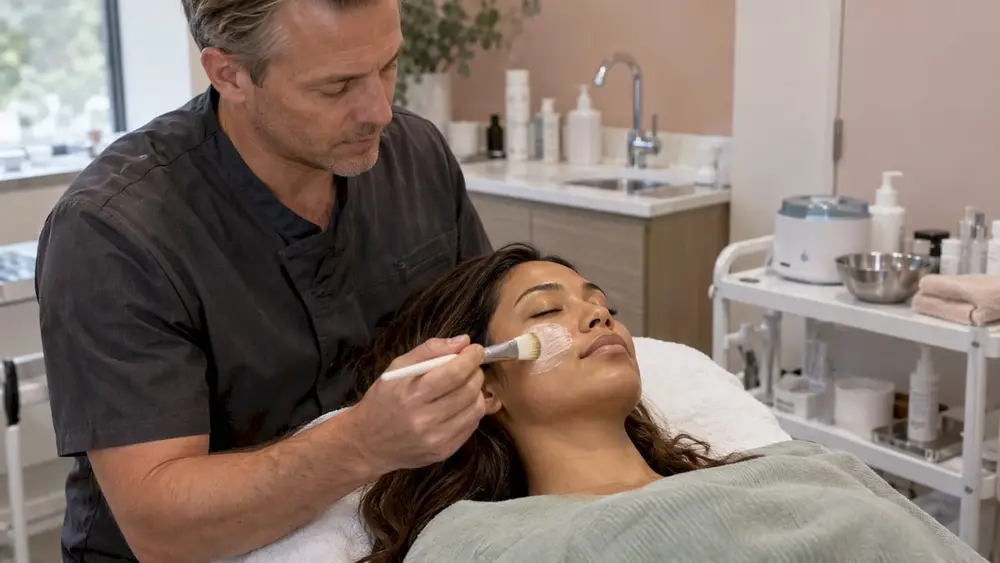
This is the hydration and glow window. A soothing, moisturizing treatment is ideal here, with no aggressive steps. Drink water, sleep, and keep your routine boring. Boring is good: it keeps your skin calm.
The day itself
Cleanse gently, moisturize, and apply sunscreen if you are going to be outside. The Canadian feature quotes Dr. Kellett recommending an exfoliating cleanser to deal with comedones and, for acne-prone skin, a gel-based moisturizer or a water-based serum. She also advises always finishing with sunscreen, and notes that a clear one you can spritz on suits the purpose. Use those only if they are already part of your routine, and not for the first time on the morning of the event.
Before the facial: shaving, waxing and what to leave alone
Hair removal is the most common mistake. Skin that has been shaved or waxed is more reactive, and facial treatments can sting or leave you blotchy.
A skincare brand’s guide to pre- and post-facial habits advises avoiding waxing or shaving your face for at least 24 to 48 hours before a facial. It also recommends spacing hair removal 24 to 48 hours away from the facial afterwards, and avoiding harsh scrubs in the 48 hours before. So the safe order is:
- Shave or wax first, and at least two days before your facial. If you can, do it a few days before the facial and tell your provider.
- Do not book laser hair removal the same week as a facial or peel without asking your provider first. We usually separate treatments so the skin is not stacked with stimulation.
- Skip scrubs, strong exfoliating acids and retinoids for a couple of days beforehand unless your provider says otherwise.
- Arrive with a clean face or be ready to cleanse on arrival. Heavy makeup just adds time.
If you have facial hair you want gone before an event, plan it so that it falls before the facial, not after, and leave a gap. Dermaplaning is an option some clients like because it is done in-clinic as part of the treatment, so you can ask about it at your consult rather than do it yourself the night before.
After the facial: makeup and aftercare
If your facial is a day or two before the event, the question is what you can do afterwards. A lifestyle magazine’s aftercare guide advises skipping heavy makeup for at least 48 hours, because foundation, concealer and powders can clog freshly cleansed pores. If you do need makeup, it suggests lightweight, non-comedogenic products and clean brushes.
That gives you a simple rule for scheduling. If you have a 48-hour gap, you can wear your usual event makeup at the event. If you are booking within 24 hours, keep it to a soothing facial and tell your makeup artist so they can prep skin gently and keep it light.
A few other things to avoid between your facial and your event:
- New skincare products, especially strong actives
- Saunas, hot yoga and very hot showers right after treatment
- Picking at anything that looks like a small breakout
- Unprotected sun, because freshly treated skin is more vulnerable
- Heavy, fragranced or experimental products. Even natural ones can irritate: if you wonder about essential oils on your face, read up on safe use before you try them around a big date.
Always follow your own provider’s written instructions first. Ours are in our pre- and post-procedure guidelines.
Choosing who does it
The week before an event is a poor time to find out your skin dislikes a product. So choose a provider on trust and track record rather than convenience or discounts.
What to look for:
- A real consult where someone asks about your skin, your medications and your timeline.
- Honest recommendations. A good provider will say when a treatment is too much for your date and suggest a gentler option.
- Clear aftercare in writing.
- Clinical oversight for anything beyond a basic facial, such as peels, lasers or injectables.
When someone tells us they have an event coming up, the first thing we do is look at the calendar, not at a treatment menu. The right facial is the one your skin can recover from before the day, and that is a different answer for a bride with six months and a client with ten days. As a Nurse Practitioner-led clinic, we treat timing as a medical question as well as an aesthetic one. We would rather suggest a calm hydrating treatment and a realistic plan than promise a transformation that needs more recovery than you have. That is what we mean by honest recommendations tailored to your goals and budget. Our approach blends clinical judgment with an artistic eye. We want you to look like yourself on the day, rested and fresh, and to feel like yourself too. Whether that means a customized facial, a layered plan that includes laser or injectables, or simply a simple routine and a good night’s sleep, we will tell you which one fits. Aida
Our perspective
Plan your event skin with us in Windsor–Essex
We are a Nurse Practitioner-led clinic serving Windsor, Tecumseh, LaSalle, Amherstburg, Lakeshore and the surrounding area. For event prep, the places to start are our customized facials and chemical peels, where treatments are tailored to your skin and your date. If you are thinking about a longer plan, our injectables and laser services can be mapped out around your schedule.
If pigment or tone is your main concern ahead of an event, our published pricing includes the Hollywood Carbon Laser Facial at $300, plus Pigment & Sun Spot Treatments, Skin Brightening & Tone Correction and Melasma-Supportive Treatments, each at $150. You can see them on our laser facial and pigment page. Because these are lasers, we suggest booking them well ahead of your date rather than in the final week.

Ready to build a timeline? Book online and tell us your event date, so we can plan backward from it.
FAQ
How far in advance should you do a facial before an event?
For a gentle, hydrating facial from a provider you trust, one to four days before is a common recommendation. For a customized facial with exfoliation or extractions, plan one to two weeks ahead. Peels and lasers need a longer buffer, roughly two weeks or more.
Should I shave my face before or after a facial?
Before, and not right before. Avoid shaving or waxing for at least 24 to 48 hours before the appointment, and leave a similar gap afterwards if you can. Tell your provider if you have shaved recently.
How long after a facial can I wear makeup?
One aftercare guide suggests skipping heavy makeup for at least 48 hours. If you must wear it sooner, keep it light, use non-comedogenic products and apply with clean brushes. Check your provider’s own instructions for your specific treatment.
Is it risky to try a new facial right before an event?
It is better to avoid it. A good treatment should not leave you red, but a first-time reaction is hard to predict. Do a trial four to six weeks out, then repeat what worked close to the date.
Can I do a facial the day before my wedding?
Yes, if it is a gentle, hydrating treatment you have had before. Skip extractions, strong acids and anything new. Let your makeup artist know so they can prep your skin lightly.
Sources
- How Often Should You Get A Facial? How Many Days Before An Event
- What Does a Pre-Oscars Facial Really Entail?
- Facial aftercare: 10 essential tips to keep your skin glowing
- The Dos and Don’ts Before and After a Facial
Recommended
This article is general information, not medical advice. Results vary from person to person, and a consultation is needed to decide whether a treatment is right for you. Book a consultation.