
A customized facial is built around your skin on the day you walk in, not around a fixed menu. The main benefits are deeper cleansing, better hydration, clearer pores, smoother texture and a plan for concerns like breakouts or uneven tone. One visit gives short-term results. A series, paired with a steady home routine, gives the lasting ones. Below, we explain what to expect, how often to book, who needs extra care, and what to do afterwards.
TL;DR
- A customized facial starts with a skin assessment, then adjusts cleansing, exfoliation, extractions and hydration to what your skin needs that day.
- A single facial brings temporary hydration and clearer pores. Visible change in acne, pigmentation or texture usually needs a series of treatments.
- Every four to six weeks suits many people, which lines up with the skin’s roughly 30-day renewal cycle.
- If you have rosacea, eczema, psoriasis, very sensitive skin, active infections or healing wounds, speak with a clinician before booking.
- What you do at home between visits matters more than any single appointment.
Table of Contents
- What makes a facial “customized”
- The main benefits of a customized facial
- What results to realistically expect
- How often to book
- Customized facials for acne-prone and sensitive skin
- Our perspective
- Facial, peel or laser: choosing the right level
- Before and after your facial
- How to choose a provider
- Customized facials at Bloom Society
- FAQ
- Sources
What makes a facial “customized”
A facial is a noninvasive treatment that can include cleansing, exfoliating, moisturizing and other steps, tailored to your skin type and needs and performed by licensed skin care professionals. The word “customized” matters because two people with the same label (“combination skin”, say) can have very different needs. One may be dehydrated and reactive after a dry Windsor winter. Another may be oily through the T-zone with stubborn congestion along the jaw.
In practice, a customized facial usually follows this order:
- Consultation. Your provider asks about your skin history, products, medications, allergies and goals.
- Skin assessment. They look at oil, hydration, texture, redness, pigment and sensitivity.
- Choice of steps. Cleanser, exfoliant, mask, extractions, massage and finishing products are chosen to match what they found.
- Aftercare plan. You leave knowing what to use, what to skip and when to come back.
The assessment and the tailored plan are the real value of going to a professional, according to a dermatology education resource that weighs whether professional facials are worth it. A generic facial can feel pleasant. A customized one changes decisions: which acid, how much pressure, whether to extract at all.
The main benefits of a customized facial
Here is what a well-matched facial can realistically do.
Deeper, more thoughtful cleansing
Professional cleansing removes the sunscreen, makeup, oil and debris that daily washing can miss. Customizing it means the provider avoids stripping dry or reactive skin and goes more thoroughly on congested areas.
Hydration where you need it
A professional facial can provide temporary hydration. That is useful if your skin feels tight, flaky or dull. The word to hold on to is temporary: hydration holds when you keep it up at home with a good moisturizer and, in winter, a gentler cleanser.
Clearer pores
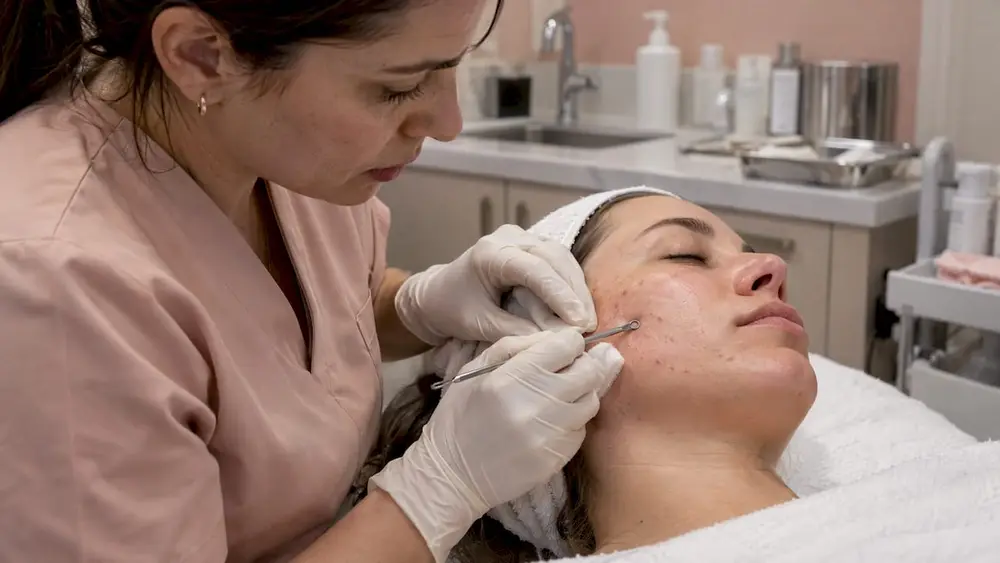
Correctly performed extractions can clear congested pores. The key words are “correctly performed”. Picking at home can leave marks and spread bacteria, and the Canadian Dermatology Association advises against picking or squeezing spots as part of acne care.
Smoother texture and a fresher look
Exfoliation, whether gentle enzymes or a mild acid, helps shed dull surface cells. Because the skin renews itself on a cycle of about 30 days, regular treatments can keep that process on track, a point made in the Cleveland Clinic’s facial overview.
A plan for specific concerns
Customized facials can address acne, pigmentation and texture concerns. That is the biggest difference from a generic spa facial: the treatment is chosen for the concern, not for the package.
| Skin concern | What a customized approach may adjust |
|---|---|
| Dehydrated, tight skin | Gentler exfoliation, hydrating masks, barrier-supporting finishing products |
| Congestion and breakouts | Targeted cleansing, careful extractions, non-irritating actives |
| Dullness and uneven tone | Surface exfoliation, brightening steps, sun protection advice |
| Sensitive or reactive skin | Fewer actives, no fragrance-heavy products, shorter contact times |
| Early signs of aging | Hydration, massage, antioxidant and peptide-based products |
Time to slow down
It is a quiet hour in a busy week. That is not a clinical benefit, but it is a real reason people keep coming back, and a relaxed visit is a perfectly good part of looking after your skin.
What results to realistically expect
A single facial gives a short-lived glow. The benefits of one session may last a few days to a couple of weeks, depending on your skin and what you do afterwards. Concerns such as acne, pigmentation and texture tend to improve best with a series of treatments and a suitable home-care routine.
That series approach is worth planning for. If you book one facial hoping to erase months of sun damage, you will probably be disappointed. If you book a short run of treatments, follow the home plan and keep using sunscreen, you give the facial a fair chance.
A daily skincare routine matters more than any single facial. Think of the appointment as a reset and a coaching session.
How often to book
For many people, a facial every four to six weeks works well, in line with the skin’s natural cycle of about 30 days. Once your concerns are under control, the gap can be stretched. Another source suggests that facials every four to eight weeks can support healthy cell turnover.
A sensible pattern looks like this:
- Starting out or treating a concern: every four weeks for a few visits, so progress builds.
- Maintaining: every six to eight weeks, adjusted by season and how your skin behaves.
- Before an event: book a few weeks ahead, not the day before, in case your skin reacts or purges.
If your skin is reactive, your provider may suggest longer gaps or milder steps. That is part of customizing, not a sign the facial is not working.
Customized facials for acne-prone and sensitive skin
Facials can be tailored for acne, but the details matter. The Canadian Dermatology Association advises people with acne to avoid over-washing and aggressive scrubbing, which can irritate skin and make breakouts worse. It recommends gentle cleansers and oil-free, non-comedogenic products. A good provider will work the same way: calm, targeted, no scrubbing for the sake of it.
If your breakouts are persistent or scarring, a facial is a support, not a substitute for medical care. Ask whether a peel or a medical consult makes more sense. Our guides on chemical peels for acne and on glycolic versus salicylic peels explain how the options differ.
Rosacea, eczema, psoriasis and very sensitive skin
People with rosacea, psoriasis, eczema or sensitive skin should be cautious or consult a doctor first. For rosacea in particular, the Canadian Dermatology Association advises avoiding fragrance, alcohol and harsh abrasives, which can trigger flare-ups. Over-the-counter acne products can irritate rosacea-prone skin further. We go into this in more detail in what is safe in a facial for rosacea.
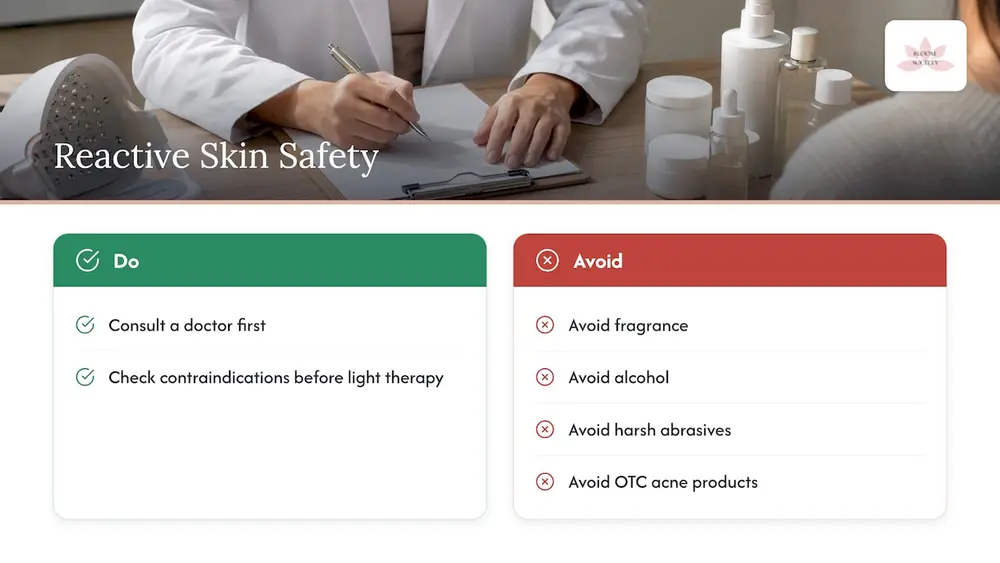
When you choose techniques and products for reactive skin, it also helps to know which heat and light treatments suit you. If you are weighing a add-on such as light therapy, read about red light therapy contraindications first and raise it at your consultation.
When to skip or postpone
- You have an active skin infection.
- You have a healing wound on your face.
- You have had a recent reaction to a product and the skin has not settled.
- You are unsure about an ingredient allergy. Tell your aesthetician about allergies before the treatment starts.
Risks to know about
Facials can cause breakouts, infection, reactions to strong ingredients or fragrances, redness, burning, and irritation or barrier damage, especially with harsh techniques or untrained providers. Choosing a trained provider and sharing your skin history are the two best protections. Health Canada is also assessing the potential health risks of salicylic acid and reminds consumers to read product labels and follow warnings and directions, which applies to products you buy for home use too.
Our perspective
We see the same thing in our Windsor–Essex treatment rooms again and again: people arrive having tried three products in a week and wondering why their skin is angry. The first thing we do is slow down. A customized facial is where medical knowledge and craft meet. Because Bloom Society is Nurse Practitioner-led, we think about skin the way a clinician does: what is the concern, what is the safest effective step, and what does this person actually want? Then we bring the artistry, so the result looks natural and feels like you. We also believe in honest recommendations. Sometimes a facial is exactly right. Sometimes a peel, a laser treatment or a series makes more sense for a concern like pigment, and we will say so, within your goals and your budget. Our approach is medically guided and evidence-based, and it is built around personalizing care to each client. That is what “customized” should mean: your skin, your goals, your pace. Aida
Facial, peel or laser: choosing the right level
A facial is the gentle, regular option. A chemical peel goes deeper into exfoliation, and laser treatments address things like pigment and texture with more intensity and more downtime. If you are unsure which to start with, our comparison of chemical peel versus facial helps you match the treatment to the concern.
A simple way to think about it:
- Maintenance, glow, hydration, mild congestion: a customized facial.
- Stubborn dullness, texture, breakouts that facials alone do not shift: a peel series, discussed with your provider.
- Sun spots, melasma-prone or deeper pigment and texture concerns: a clinical assessment for laser or light-based options.
If you have darker skin, the choice of laser matters even more. Read our primer on laser for dark skin in Canada before booking anything with heat.
Before and after your facial
Before
- Arrive with a clean idea of your current routine: write down cleansers, serums, acids and retinoids, including how often you use them.
- Mention medications, allergies, recent sun exposure, recent waxing or other treatments.
- Skip exfoliating acids and scrubs for a few days beforehand unless your provider says otherwise.
- Wear no makeup if you can, or be ready to have it removed.
After
After a professional facial, use high-quality serums and moisturizers. A well-formulated ceramide moisturizer can help seal in the hydration the treatment has delivered, according to the School of Dermatology’s discussion of professional facials.
The practical list:
- Use a gentle cleanser and a barrier-supporting moisturizer.
- Apply sunscreen every morning, and reapply outdoors.
- Skip new strong actives, scrubs and hot treatments for a day or two, unless your provider recommends otherwise.
- Do not pick at flaking or any congested spots.
- Wash makeup brushes and change pillowcases, which the Canadian Dermatology Association lists as part of acne care.
In a study of radiofrequency microneedling, a post-treatment skincare protocol improved confidence, comfort and satisfaction. That was a different treatment from a facial, but the lesson carries over: clear aftercare makes people feel better about their results. If you have a peel, our first 48 hours peel aftercare guide gives you a step-by-step plan.
Keeping results between visits
Hydration fades without home care. Daily cleansing, moisturizer and sunscreen do most of the work, and some people add supportive routines on top. If you are curious about adding red light therapy options to a home or clinic routine, discuss it with your provider first so it fits your skin and your products. When you shop, our piece on vetting medical-grade skincare shows what to look for on a label and from a seller.
How to choose a provider
- They assess before they treat. You should be asked about your history, products and goals.
- They explain the steps and the reasons. If you cannot tell why a product was chosen, ask.
- They are trained and licensed, and they welcome questions about allergies and skin conditions.
- They are honest about limits. A good provider tells you when a facial is not the right tool.
- They give you a plan, not just a pleasant hour.
Customized facials at Bloom Society
We offer customized facials and chemical peels at our Windsor–Essex clinic, delivered by our medical aesthetic team under Nurse Practitioner-led care. We start with your goals and skin history, then recommend the treatment that fits, with an honest view on whether a facial, a peel or something stronger will serve you best. Facial pricing is not published online, so ask when you book.

See our customized facials and chemical peels or go straight to online booking. If you are wondering about pigment or sun spots, our Hollywood Carbon Laser Facial is listed at $300, and you can see it with our other laser skin treatments on our laser facial page.
FAQ
What are the benefits of a customized facial?
A customized facial can deliver deeper cleansing, temporary hydration, clearer pores, smoother texture and a plan for concerns like acne or uneven tone. Because it is adjusted to your skin on the day, you get fewer irritating steps and more of the useful ones. Lasting change usually comes from a series and a consistent home routine.
How long do the results of a facial last?
The glow and hydration from one facial typically last a few days to a couple of weeks. Regular treatments every four to eight weeks can support healthy cell turnover. Your daily routine, sun protection and skin type all affect how long the effect lasts.
What should I avoid after a facial?
For a day or two, avoid harsh scrubs, strong new actives, picking at your skin and anything that heats or irritates it, unless your provider tells you otherwise. Use a gentle cleanser, a good moisturizer and sunscreen. If you had a peel or another stronger treatment, follow the specific aftercare you were given.
Can I get a facial with sensitive or acne-prone skin?
Often yes, when it is tailored and the provider knows your history. If you have rosacea, eczema, psoriasis or very reactive skin, check with your doctor or clinician first. Avoid facials when you have an active infection or a healing wound on your face.
How much should I tip for a facial?
Tipping is a personal choice and varies by provider and clinic, so ask when you book whether gratuity is customary there. Many people in Canada tip for personal services when they are happy with the care, but there is no fixed rule to follow.
Sources
- Facials: What Are They, and What Do They Really Do? (Cleveland Clinic)
- Professional Facials: Are They Worth It? (School of Dermatology)
- Do regular facials actually improve your skin? (Khaleej Times)
- Do Facials Really Help Your Skin? (UPMC HealthBeat)
- Acne (Canadian Dermatology Association)
- Rosacea (Canadian Dermatology Association)
- Learn about salicylic acid (Health Canada)
- An Open-label Study Assessing the Efficacy and Tolerability of Radiofrequency Microneedling (PMC)
Recommended
This article is general information, not medical advice. Results vary from person to person, and a consultation is needed to decide whether a treatment is right for you. Book a consultation.