
Mesotherapy is a broad term for injecting mixtures of substances into the skin. In Canada, the fat-dissolving injection with a regulatory approval behind it is deoxycholic acid, used for fullness under the chin. Injection lipolysis is the more precise name for that kind of treatment. Below, we explain how these injections work, how well they perform, which side effects to expect and what to check before you book.
TL;DR
- “Mesotherapy” covers many injected blends. “Injection lipolysis” usually means deoxycholic acid, which breaks down fat cells in a small, targeted area.
- Health Canada approved a deoxycholic acid product (Belkyra) on July 24, 2015, for moderate to severe fullness under the chin in adults. Use outside that area is not part of the approved labelling.
- Swelling, bruising, numbness and tenderness are common. Nerve injury and trouble swallowing are rare but serious, so injector training and technique matter.
- This is contouring, not weight loss. Good candidates have localized fat and reasonably firm skin, and often need more than one session.
- A nurse practitioner assessment is the right first step to decide whether injections suit your anatomy and goals.
Table of Contents
- Mesotherapy and injection lipolysis: what the terms mean
- How fat-dissolving injections work
- How well does it work?
- Who is a good candidate?
- Side effects and risks
- Why the injector matters more than the product
- Is it safe? What to check in Canada
- Mesotherapy versus deoxycholic acid injections
- Our perspective
- Book a fat-dissolving consultation in Windsor–Essex
- Preparing for your appointment
- FAQ
- Sources
Mesotherapy and injection lipolysis: what the terms mean
The two words get used as if they were the same thing. They are not.
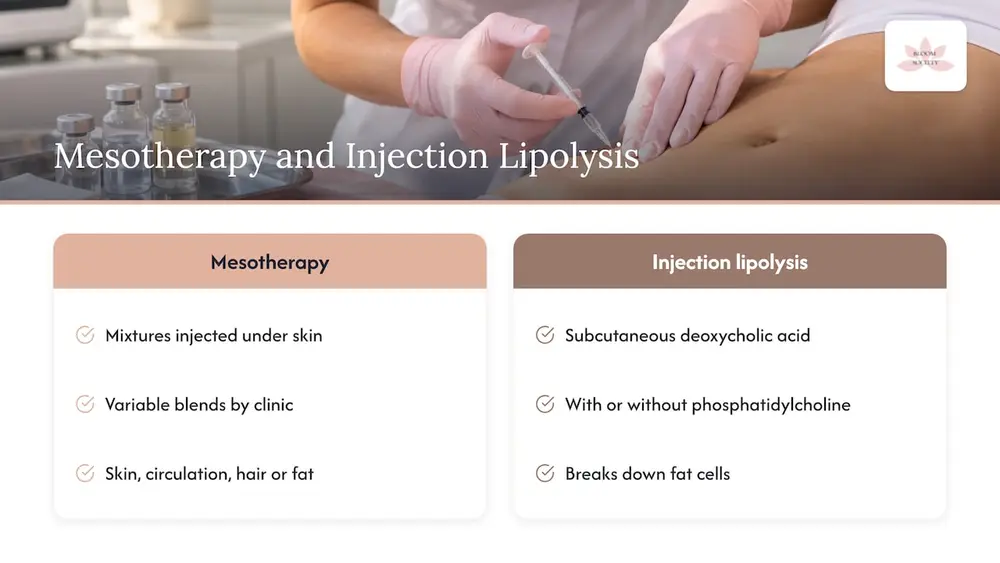
Mesotherapy refers to injecting mixtures of substances into the layers just under the skin. The blends vary from clinic to clinic and can be aimed at skin quality, circulation, hair or fat. Injection lipolysis is narrower. According to the Oregon Medical Board, it uses subcutaneous deoxycholic acid, alone or with phosphatidylcholine, to break down fat cells.
That difference explains why search results for this topic are so inconsistent. One page promises a vague “fat melting cocktail”. Another describes a single, well-studied molecule. If you are comparing options, ask what exactly is in the syringe, what it has been studied for and which area it is meant for.
How fat-dissolving injections work
Deoxycholic acid is a naturally occurring bile acid that helps the body digest fat. The version used in approved products is synthetic. A Canadian dermatology review notes that Health Canada-approved deoxycholic acid is synthetic and not derived from animals or humans.
When it is injected into a small pocket of fat, it acts like a detergent on the fat cell membrane. Research on injected deoxycholate found that fat cells are especially sensitive to this effect because they lack the cell-associated proteins that neutralize it. The same Canadian review describes the result as adipocytolysis, where the cell membrane is disrupted and the treated area shows lasting fat reduction.
In plain terms:
- The injected fat cells break down.
- Your body clears the debris over the following weeks.
- The treated area becomes slimmer as the cells are removed.
Because the cells are destroyed rather than just shrunk, the change is meant to be lasting in the treated area. That does not stop you gaining fat elsewhere if your weight rises.
How well does it work?
The clearest Canadian data comes from the regulator’s own review. In the pivotal phase 3 trials summarized by Health Canada, 68.2% of subjects had at least a 1-grade improvement on the combined clinician- and patient-reported submental fat scales 12 weeks after the final treatment.
Three points help you read that number sensibly:
- It describes the chin and under-chin area. That is where the evidence is strongest.
- “At least 1-grade improvement” means a visible step on a scale. It does not mean the area disappears.
- Results vary by person, which is why a proper assessment comes first.
On the wider term, an academic position paper from Indian dermatology specialists says that mesotherapy remains controversial because few peer-reviewed trials evaluate its safety and efficacy for cosmetic uses. In practice, this is why we focus on products and techniques with a clear regulatory and clinical record, and on honest conversations about what each can do.
How many sessions?
The Health Canada product monograph says up to six treatments may be needed, depending on the patient. Pages ranking for this keyword quote anything from 3 to 15 sessions for mesotherapy blends, which shows how loosely the term is used. Your plan should come from an exam of your own anatomy, not from a package number.
A typical pattern is a series of sessions spaced several weeks apart, so the swelling settles and the results can be judged before the next round. We outline our approach to double chin treatment on our double chin injections page.
Who is a good candidate?
The monograph describes suitable patients as adults with moderate to severe fullness under the chin and without excessive skin laxity. Several things make someone a better fit:
- Localized fat you can pinch. The treatment targets a pocket of fat, not general body weight.
- Skin with reasonable elasticity. If the skin is loose, removing fat can leave it looking looser. Other treatments may suit you better, alone or alongside injections.
- No other cause for the fullness. The monograph says patients should be screened for other causes of a rounded under-chin profile, such as an enlarged thyroid or swollen lymph nodes before injections. A medical assessment matters here, and it is one reason a nurse practitioner-led clinic is a sensible place to start.
- Realistic expectations. This is contouring. It is not a weight-loss method.
Is this like a weight-loss injection?
No. People often confuse the two because both use the word “injection”. Weight-loss medications act on the whole body through appetite and metabolism, and a physician or nurse practitioner prescribes them for medical reasons. Fat-dissolving injections act only on the cells where they are placed. If your goal is to lose weight overall, the right conversation is about medical weight management. If your goal is to refine one stubborn area, injection lipolysis may be a fit. We can talk through which applies to you at a consultation.
How else can localized fat be reduced?
Localized fat is the pocket that stays no matter how you eat or train. Options generally fall into three groups:
- Injectable breakdown of fat cells, as described here.
- Energy-based devices that target fat or tighten skin.
- Surgery such as liposuction, which removes fat physically and involves anaesthesia and downtime.
Injections suit people who want a non-surgical route for a small area. A short consultation will tell you which group matches your anatomy and your timeline.
Side effects and risks
This is the part many people search for first, and it deserves a straight answer. The Health Canada monograph lists the most common reactions as pain, swelling, bruising, numbness, firmness, redness and nodules at the injection site, occurring in more than 10% of patients. Itching is also listed.
What that feels like in daily life:
- Swelling is the main one. The area can look noticeably fuller for days to a couple of weeks, so plan the timing around events and work.
- Bruising and tenderness are similar to what you would expect from other injectables.
- Numbness or firm lumps can linger and generally settle over time.
Less common but serious effects
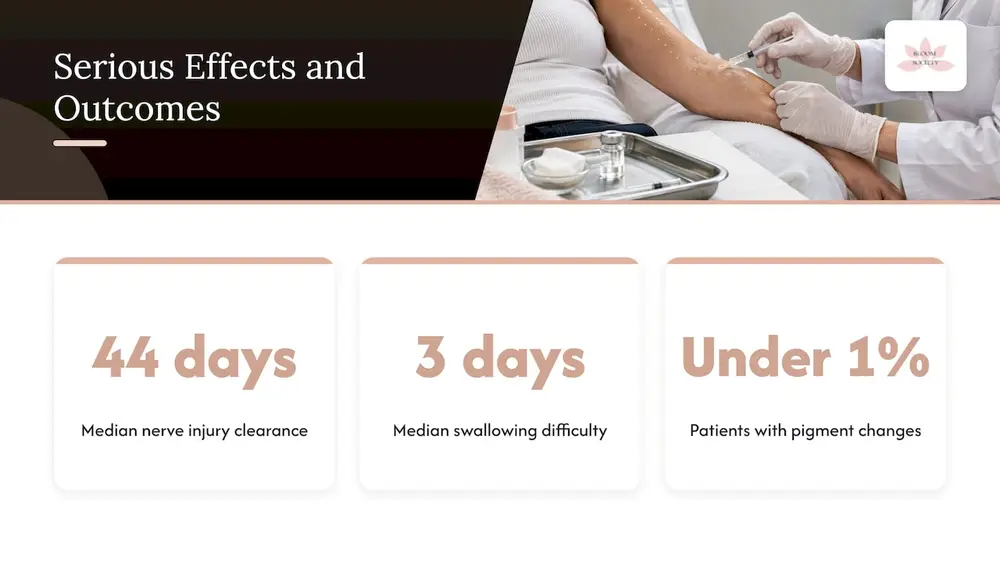
The same monograph names more serious risks: injury to the marginal mandibular nerve, which can cause an uneven smile, difficulty swallowing, and skin ulceration or necrosis. These risks rise if the product is injected too superficially or into the wrong layer. Clinical data summarized by a consumer health publisher states that nerve injury cleared on its own in a median of 44 days, and trouble swallowing in a median of 3 days.
A Canadian review also notes that changes in pigment, either darker or lighter, occurred in under 1% of patients, particularly in darker skin types. If you have a deeper skin tone, mention your history of pigment changes at your assessment.
See your injector or a physician promptly if you notice trouble swallowing, a drooping or uneven smile, blistering, or skin that turns dark or breaks down.
Aftercare that helps
Published advice suggests avoiding intense exercise for 24 to 48 hours and heat such as saunas for 24 hours to keep swelling down. Your own instructions from the clinic take priority. Ours are collected on our pre and post procedure guidelines page.
Why the injector matters more than the product
The same syringe can give very different outcomes in different hands. Training in the anatomy of the jawline and neck, correct needle depth in the fat layer above the platysma muscle and careful mapping to avoid the marginal mandibular nerve all decide safety. One practitioner overview makes the point that outcomes depend heavily on technique, depth and knowledge of local anatomy.
The Health Canada monograph is explicit that Belkyra should only be used by healthcare professionals specially trained in its use. It is the same principle we apply to every injectable. If you want to understand how technique shapes safety in other treatments, our posts on filler technique and Botox side effects go into it. For a wider view of how injectable complications arise and are managed, this overview of the risks of filler injections is a good companion read.
Is it safe? What to check in Canada
When readers ask whether deoxycholic acid is safe, the useful answer is: it is safe when the right product is used in the right area by a trained clinician. Here is a short checklist for any fat-dissolving treatment:
| Question | Why it matters |
|---|---|
| Who is injecting, and what is their training? | The product is meant for trained healthcare professionals. |
| Is the area the approved one? | Health Canada approved Belkyra on July 24, 2015, for fullness associated with submental fat in adults. |
| What is in the syringe? | A defined, regulated product is different from a compounded or unlabeled blend. |
| Has my neck been examined first? | Other causes of fullness should be ruled out. |
| What is the aftercare and follow-up plan? | You should know what is normal and who to call. |
Two cautions deserve their own line. First, use outside the chin area has not been established as safe and effective and is not recommended in Health Canada-approved labelling. Second, a 2026 review in an academic journal notes that regulators such as the FDA warn against unapproved fat-dissolving injections, often compounded or sold online, which have been linked to serious, permanent or disfiguring complications. Never buy injectables online to use yourself.
Mesotherapy versus deoxycholic acid injections
People searching for a comparison usually want to know which is better. A fair comparison looks like this:
| Mesotherapy blends | Deoxycholic acid injections | |
|---|---|---|
| What it is | Mixtures that vary by clinic | A single active ingredient |
| Main evidence base | Limited peer-reviewed trials, according to a dermatology position paper | Phase 3 trials summarized by Health Canada |
| Area | Many claimed areas | Under the chin is the approved area |
| Standardization | Varies | Defined product and labelling |
If you want a predictable plan for the chin, the well-documented route is the sensible one. If you are considering anything else, ask the practitioner to explain the ingredients, the evidence and the area plainly.
Our perspective
We see many people who arrive having read three different promises about “fat melting”. They are often confused about what they would actually be getting. Our view is simple. Treat the face and neck as anatomy first and aesthetics second. Examine the area, rule out other causes of fullness, then build a plan around your goals and your budget. That is what a nurse practitioner-led clinic can offer: medical judgement together with an eye for natural balance. We also believe in saying plainly when a treatment is not the right first step. Sometimes the answer is injections. Sometimes it is a skin-tightening or resurfacing approach, or a conversation about overall health. Our aim is that you leave knowing your options and feeling like yourself, only more confident. Aida
Book a fat-dissolving consultation in Windsor–Essex
We offer fat-dissolving injections as part of our injectables services for clients in Windsor, Tecumseh, LaSalle, Amherstburg, Lakeshore and Detroit. Pricing is not published online, so the quickest way to understand cost and the number of sessions is a consultation, where a nurse practitioner assesses the area and recommends a plan.

When you are ready, you can book online. If you would like to see how we approach injectables more generally, our blog covers safety, technique and what to expect.
Preparing for your appointment
A few habits make the visit more useful:
- Bring a list of medications and supplements, and tell us about any thyroid or neck conditions.
- Note your health history, including allergies and any prior injectable treatments.
- Think about the timing. Swelling can be visible for days, so avoid scheduling right before a photo or event.
- Decide what you want to change. A clear goal helps us tell you honestly whether injections can deliver it.
FAQ
Is mesotherapy the same as Kybella or Belkyra?
No. Mesotherapy is a general term for injected mixtures, while Kybella (sold in Canada as Belkyra) is a specific deoxycholic acid product. The Oregon Medical Board describes injection lipolysis as the use of deoxycholic acid under the skin to break down fat cells. The two terms overlap in search results but mean different things.
What are the most common side effects of deoxycholic acid injections?
The most frequent are pain, swelling, bruising, numbness, redness, firmness and nodules at the injection site. Rarer but serious effects include nerve injury affecting the smile, trouble swallowing and skin damage. Choosing a trained injector reduces these risks, and you should contact your clinician quickly if you notice them.
How long do the results last?
Deoxycholic acid destroys the treated fat cells, and the aim is a lasting change in that area. Final results are judged after the swelling settles and the treatment course is complete. Weight gain elsewhere in the body can still change your overall shape.
Can fat-dissolving injections replace weight-loss treatment?
No. They contour small areas and do not reduce overall body weight. If weight management is your goal, talk with a nurse practitioner or physician about medical options. If a stubborn pocket remains, injections may be a useful finishing step.
Sources
- Oregon Medical Board: Mesotherapy and Injection Lipolysis
- Canadian Dermatology Today: Belkyra review
- Tissue-selective effects of injected deoxycholate
- Health Canada: Regulatory Decision Summary for Belkyra
- Health Canada: Belkyra product monograph
- Position paper on mesotherapy, Indian Journal of Dermatology, Venereology and Leprology
- WebMD: Kybella overview
- What Is Injectable Lipolysis?
- Frontiers in Medicine: Injection lipolysis in aesthetic medicine
- Risks of filler injections overview
Recommended
This article is general information, not medical advice. Results vary from person to person, and a consultation is needed to decide whether a treatment is right for you. Book a consultation.