Midface First Nasolabial Fold Filler: 6–18 Month Results

**
**
Hyaluronic acid fillers are the evidence-based first-line treatment for nasolabial folds caused primarily by midface volume loss, but they’re not the right answer for everyone. When severe skin laxity or heavy, sliding cheek fat is driving the crease, filler can actually make the lower face look heavier. The best results depend as much on where the product goes and who injects it as on the filler itself, and reversal with hyaluronidase remains available if anything needs correcting.
TL;DR:
Hyaluronic acid fillers are most effective for nasolabial folds caused mainly by volume loss, but they can worsen heaviness if severe laxity or cheek descent is present.
Deep midface support using a midface-first approach tends to last longer and preserves natural contours better than direct superficial injection alone.
Combining multilayer techniques with microbolus injections in deep and superficial layers, preferably using cannulas, reduces risks and improves natural-looking results.
Candidates with significant skin laxity or cheek descent may need skin tightening or a surgical lift instead of filler alone, as filler cannot address loose tissue.
Most filler effects last around six to eighteen months, with placement depth and technique being critical factors for longevity and safety.
Table of Contents
What causes nasolabial folds, and which filler types treat them?
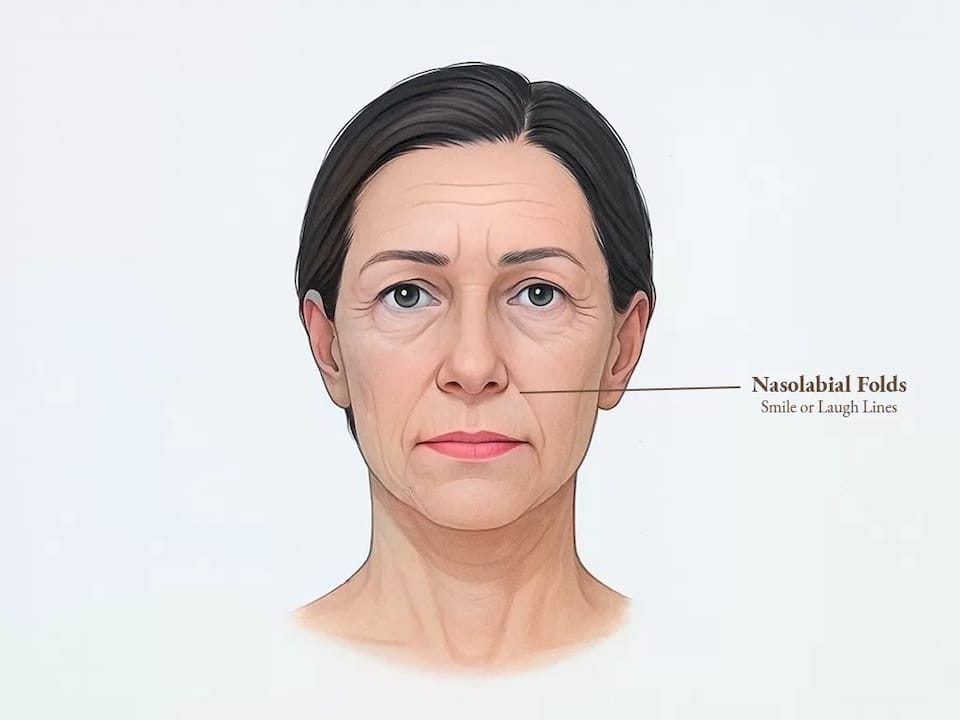
Nasolabial folds, the creases running from the sides of the nose to the corners of the mouth, form for a mix of reasons: loss of fat and bone volume in the midface, gradual descent of cheek tissue, repetitive muscle movement, and simple loss of skin elasticity with age. That mix matters because the same crease can have three different underlying causes on three different faces, and treating the wrong one wastes filler and disappoints the patient.
Hyaluronic acid (HA) is the dominant filler category used for this area, and for good reason. It’s biocompatible, it integrates naturally into tissue, and if a correction ever looks wrong or causes a problem, hyaluronidase reliably dissolves it within 24 to 48 hours. That reversibility is a genuine safety advantage over other filler classes.
Beyond HA, a few biostimulator categories show up regularly in nasolabial fold treatment plans, especially for patients dealing with broader volume loss rather than an isolated crease:
Calcium hydroxyapatite (CaHA), marketed as Radiesse, stimulates the body’s own collagen production and works well for deeper structural support.
Poly-L-lactic acid (PLLA), marketed as Sculptra, builds volume gradually over weeks to months by triggering collagen synthesis, making it a common choice for broader midface rejuvenation rather than a quick single-session fix.
Polymethylmethacrylate (PMMA) fillers are semi-permanent and used less often for this region, given the difficulty of reversing them if the outcome is unsatisfactory.
According to Cleveland Clinic’s patient guidance, HA, CaHA, and PLLA are the three most commonly used filler categories for nasolabial folds, with effects generally lasting six months to a year depending on product and placement. Botulinum toxin has a limited but real role too, mainly when muscle movement around the mouth is contributing to the fold rather than static volume loss alone. That’s the crux of the botox vs filler question people ask constantly: they’re not competing treatments, they’re solving different problems.
The choice between injecting directly into the fold versus rebuilding midface volume first isn’t cosmetic preference. It’s the single biggest factor separating a filler treatment that looks refreshed from one that looks like something was simply piped into a wrinkle.
How do injectors actually treat the fold: direct, midface, and multilayer approaches?
Three main strategies exist, and skilled injectors often blend them rather than picking just one.
Direct injection places filler right into the fold itself, usually in the subdermal plane, and works best for folds that are genuinely superficial with minimal underlying volume loss. It’s the fastest approach and gives immediately visible softening, but used alone on a deep, volume-driven fold, it tends to produce an unnatural, overstuffed look rather than a real correction.
Midface structural support takes a different view of the problem entirely. Rather than treating the crease as the target, injectors add volume to the deep medial cheek fat compartments or the pyriform region below the nose, restoring the underlying architecture that’s collapsed with age. According to the assessment, strategy, and treatment (AST) protocol used in clinical practice, this indirect approach frequently softens the fold as a secondary effect, without a single injection touching the crease itself. It preserves the natural contour of the cheek rather than flattening it, which is the main complaint patients have about older-style direct-injection-only treatments.
Multilayer techniques combine both ideas in a single session. A described multilayer injection method uses a firmer, higher-viscosity filler in the deep pyriform layer for structural support, then a softer, lower-viscosity HA product in the superficial layer to smooth the visible line. In a reported case series, this approach used a small amount of filler per side and maintained correction at six months with minimal complications, though the authors were explicit that speed and technique matter enormously here.
A typical multilayer session generally follows these steps:
Assess the midface at rest and during animation.
Select appropriate filler types for deep and superficial layers.
Inject the deep layer first with small microboluses, avoiding large deposits.
Reassess volume and symmetry.
Add superficial correction carefully.
Palpate and review the area before concluding the session.
Cannula-based injection has become the preferred tool for the deep layers in many practices, largely because a blunt-tipped cannula is far less likely to puncture a blood vessel than a sharp needle. Many injectors also favour a lateral entry point with perpendicular tunnelling relative to the facial artery, a technique detail aimed squarely at reducing the risk of accidentally injecting filler into a vessel.
Pro Tip: Ask your injector directly whether they use a cannula or needle for the deep midface layer, and whether they inject in microboluses. Their answer tells you a lot about how carefully they’ve thought through vascular safety, not just aesthetics.
Are you a good candidate for nasolabial fold filler?
Not every fold responds well to filler, and a good consultation should feel like an assessment, not a sales pitch. The following factors determine whether filler is likely to help or backfire:
Skin laxity: mild to moderate laxity generally responds well; severe, crepey, or heavily sagging skin often does not, because filler adds volume but can’t lift or tighten loose tissue.
Cheek ptosis (sagging): if the midface has visibly dropped rather than simply lost volume, adding filler to the fold alone can worsen the appearance of heaviness lower on the face.
Bone support: significant underlying bone resorption, common in long-term smokers or people with a history of significant weight loss, may need more structural correction than filler alone provides.
Dynamic movement: folds that appear mainly when smiling and largely disappear at rest often respond better to a combination of filler and neuromodulator than to filler alone.
Health contraindications: active skin infection in the treatment area, certain autoimmune conditions, and known allergies to filler components rule out treatment until resolved.
When heavy, sliding cheek fat or severe laxity is the dominant issue, filling the fold directly can flatten natural contours and actually draw more attention to lower-face heaviness. In those cases, energy-based skin tightening devices, PDO thread lifts, or a surgical facelift are the more appropriate route, since they address the mechanical problem of loose or descended tissue rather than trying to camouflage it with volume.
Combination approaches are common and often the smartest option. A patient with moderate volume loss plus mild skin laxity might do well with midface filler now and a non-surgical tightening treatment layered in later, rather than expecting one modality to solve two separate problems. Injectors who are honest about these limits, rather than defaulting to “more filler,” tend to deliver results that age better over the following year.
What do the clinical trials actually show?
The strongest evidence on nasolabial fold filler comes from a systematic review and meta-analysis of randomized clinical trials pooling outcomes across multiple filler studies using two standard measurement tools: the Wrinkle Severity Rating Scale (WSRS) and the Global Aesthetic Improvement Scale (GAIS).
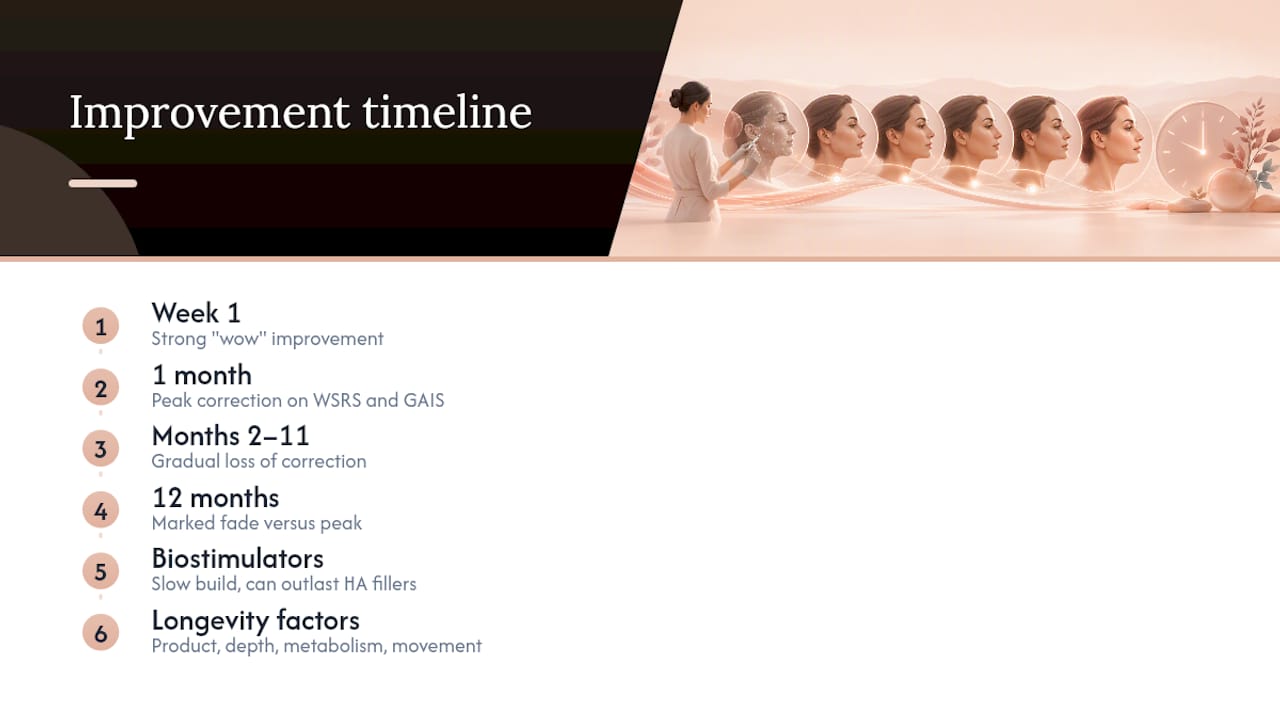
The numbers: pooled WSRS scores improved substantially at one month post-treatment, with peak correction, then gradually faded by the 12-month mark. GAIS followed a similar pattern: strong early improvement, gradual fade by the one-year point.
That pattern tells you something practical: the “wow” result you see in week one is not the result you’ll be living with a year later, and any injector who implies otherwise is setting unrealistic expectations. Most HA fillers in this area last a temporary period typically lasting several months, with the wide spread explained by product choice, injection depth, metabolic rate, and how much movement happens in the treated area. Biostimulators like PLLA behave differently again: results build slowly over weeks as collagen forms, and the resulting improvement can outlast a comparable HA treatment, though it’s less immediately visible on the day of injection.
Depth of placement plays a bigger role in longevity than most patients realize. Deep structural placement, the midface-first approach, tends to hold up longer than superficial injection directly into the fold, partly because deeper tissue planes experience less mechanical stress from facial movement and partly because the product is metabolized more slowly at that depth. This is one more reason the midface-first philosophy keeps showing up across serious clinical protocols rather than being a marketing angle.
What are the risks, and how are vascular complications managed?
Most side effects from nasolabial fold filler are minor, expected, and temporary. The same meta-analysis of randomized trials pooling complication data across studies reported an overall incidence of mild complications, with common issues including lumpiness or visible unevenness, tenderness at injection sites, swelling lasting several days, and bruising, particularly with needle-based injection
These are the complications that resolve on their own or with minor massage and time. They’re annoying, not dangerous.
The complication that genuinely matters is vascular occlusion: filler accidentally injected into or compressing a blood vessel, cutting off circulation to surrounding tissue. It’s rare, but it’s the reason technique and anatomical knowledge separate a good injector from a risky one. Warning signs include immediate, disproportionate pain during injection, skin blanching (turning white) followed by a mottled or dusky discolouration, and delayed healing or skin breakdown in the days afterward.
Immediate management matters enormously here. An experienced injector should stop injecting the moment occlusion is suspected, apply warm compresses, massage the area, and administer hyaluronidase without delay if an HA filler was used since it can dissolve the offending product and restore blood flow before permanent tissue damage occurs. This is precisely why HA remains the preferred category for this anatomically sensitive area: biostimulators like Sculptra and Radiesse, along with permanent fillers, cannot be reversed with hyaluronidase, which raises the stakes considerably if something goes wrong.
Ask your injector directly whether they stock hyaluronidase on-site and have a written emergency protocol for vascular events. A clinic without a clear answer to that question is not one to book with, regardless of how their portfolio photos look.
What happens during a consultation and treatment session?
A proper nasolabial fold filler consultation looks more like a diagnostic appointment than a shopping trip.
Screening and history: expect questions about allergies, prior filler or toxin treatments, medications (particularly blood thinners), and any history of cold sores, since the treatment area can trigger outbreaks.
Facial assessment: the injector examines your face at rest and while animated (smiling, talking) to distinguish volume loss from dynamic movement from skin laxity.
Marking: treatment points and injection planes get marked directly on the skin, often including landmarks like the pyriform region and, for deeper work, the infraorbital foramen, which clinicians palpate and mark to avoid injuring the infraorbital artery during deep injections.
Numbing: topical anesthetic cream, ice, or occasionally a nerve block is applied depending on the depth and extent of planned injection.
Injection: filler is placed in stages, often deep layer first, then superficial, with the injector checking symmetry and contour between each pass.
Immediate review: you’ll look in a mirror before leaving, and any obvious asymmetry gets addressed on the spot rather than left for a follow-up visit.
Swelling and mild bruising are normal for the first two to four days, with most visible puffiness resolved within a week. Following clear aftercare instructions around avoiding strenuous exercise, alcohol, and excessive heat in the first 24 to 48 hours reduces both bruising and swelling duration. Final results are typically assessed at the two-week mark, once any residual swelling has fully settled, and that’s the appropriate time for a touch-up if one is needed.
What does nasolabial fold filler typically cost?
Cost depends heavily on the strategy, not just the product. A conservative, direct-injection-only treatment addressing a mild fold might use a single syringe (roughly 1 mL), while a midface-first or hybrid approach addressing broader volume loss commonly requires two to four syringes across both cheeks and the fold itself.
Three general treatment patterns show up in practice:
Single-session direct correction: lowest syringe count, fastest to complete, best suited to mild folds with minimal underlying volume loss.
Midface-first structural plan: higher syringe count upfront, often staged across one or two sessions, aimed at correcting the root cause rather than the visible symptom.
Staged combination approach: smaller volumes injected over multiple sessions spaced weeks apart, allowing the injector to reassess and adjust before adding more product, generally the most conservative and least likely to result in overcorrection.
Staged treatment tends to cost slightly more in total than a single aggressive session, simply because of the added appointments, but it substantially lowers the risk of overfilling and gives both patient and injector room to fine-tune results as swelling settles. Continuity with the same injector across sessions matters too. Someone who treated you six months ago already knows your anatomy, your healing pattern, and where prior filler sits, which meaningfully reduces the odds of a complication and generally produces a more cohesive result over time than switching providers each visit.
Bloom Society’s approach to nasolabial fold treatment
Some clinics approach injectable treatment starting with an honest assessment rather than a product pitch. That distinction matters for a treatment area as anatomically sensitive as the nasolabial fold, where the wrong plan can leave someone looking heavier through the lower face rather than more refreshed.
Consultations at Bloom Society focus on identifying whether volume loss, cheek descent, or dynamic movement is actually driving a patient’s fold, then building a plan around that specific cause rather than defaulting to direct injection. That often means a conservative, staged approach: smaller initial volumes with planned follow-up rather than one large session designed to “fix everything” in a single visit.
The clinic’s injectables services include the midface-aware techniques described throughout this guide, alongside clear pre- and post-procedure guidance so patients know exactly what to expect before they book. Nurse practitioners bring both the clinical training to recognize and respond to rare complications like vascular occlusion and the aesthetic judgment to know when less filler, placed more thoughtfully, beats more filler placed carelessly. That combination of medical scope and artistry is the whole premise behind treating causes rather than just softening a crease.
Softening the fold, not erasing it
The biggest mistake in nasolabial fold treatment isn’t choosing the wrong filler. It’s chasing a completely flat, crease-free result that doesn’t actually exist on a moving, expressive face. Some fold at rest and more fold when smiling is normal anatomy, not a flaw to eliminate.
Overcorrection creates a specific, recognizable problem: an unnaturally full, sometimes pillow-like midface that reads as “worked on” rather than rested. It also compounds over time, since each maintenance session adds to an already excessive base rather than simply refreshing what’s faded. Anatomy-led, staged treatment avoids that trap almost by design, because it forces reassessment between sessions rather than committing to a large volume upfront and hoping it looks right.
The injectors getting this right treat the crease as one symptom of a broader structural picture, address the cause where it exists, and stop well short of “perfect.” That restraint is the actual skill, more so than any specific product or technique discussed above.
— Aida
Ready to talk to someone about your options?
If you’ve read this far, you already understand more about nasolabial fold treatment than most people who walk into a consultation cold. That’s exactly the kind of informed conversation Bloom Society wants to have: no pressure toward the biggest treatment plan, just an honest read on whether your fold is driven by volume loss, descent, movement, or some combination, and what that actually means for your options.

Nurse practitioners at some clinics assess midface structure, skin quality, and goals before recommending any treatment, which may result in a filler plan, a combination approach, or advice that filler may not be the best initial option. Bring a list of any prior injectable treatments, current medications, and a clear sense of what’s bothering you most about the area so the consultation can move efficiently. You can explore the clinic’s injectables page for more detail on what’s offered, or go straight to booking a consultation if you’re ready to get a personalized read on your own face.
Sources
For readers who want to go deeper into the clinical evidence behind this guide, the systematic review and meta-analysis of randomized trials covers pooled WSRS and GAIS outcomes in detail. The AST protocol paper lays out the midface-first assessment framework referenced throughout this article, while the multilayer injection technique study describes the microbolus dosing and cannula methods discussed above. Cleveland Clinic’s patient guide offers accessible background on filler types and recovery expectations.
This article is general information, not a substitute for advice from a qualified doctor. Consult a qualified healthcare professional about your own circumstances before acting on anything here.
FAQ
Are fillers good for treating nasolabial folds?
Yes, when the fold is driven mainly by volume loss, hyaluronic acid fillers are a well-supported first-line option, with clinical trials showing measurable improvement on standard wrinkle severity scales. Filler is a poor choice when severe skin laxity or heavy cheek descent is the primary cause, since it can worsen lower-face heaviness in that situation.
How long does filler for nasolabial folds actually last?
Most HA fillers last roughly six to eighteen months, with pooled trial data showing peak improvement around one month and a gradual return toward baseline by twelve months. Deeper, midface-first placement tends to hold up longer than filler injected directly and superficially into the fold.
Is Juvederm or Restylane better for nasolabial folds?
Both are established hyaluronic acid filler brands, and clinical outcomes depend far more on injection technique, plane selection, and product rheology matched to the treatment area than on brand alone. An injector who assesses your specific anatomy and chooses rheology accordingly will typically produce a better result than one who defaults to a single go-to product regardless of your facial structure.
What is the most effective treatment for nasolabial folds?
For folds caused by midface volume loss, a combination of structural midface support and selective direct injection, often using a multilayer technique, tends to outperform direct injection alone. When skin laxity or cheek descent dominates, energy-based skin tightening or a surgical lift addresses the actual mechanical problem more effectively than filler.
Should I get Botox or filler for smile lines?
Filler and Botox solve different problems: filler restores lost volume, while Botox relaxes the muscle movement that can deepen a fold during expression. Many patients benefit from a filler-based plan first, with Botox added later only if dynamic movement is clearly contributing to the crease.
Recommended
Comments